

Introduction
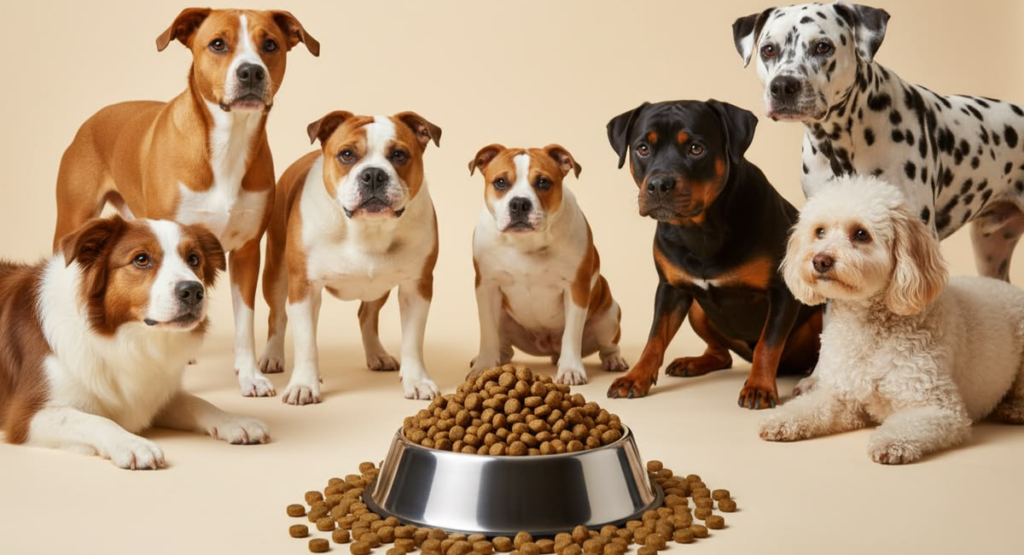
If you’ve ever wondered can adult dogs eat puppy food, you’re not alone. Many dog owners face this question when their adult dog eats from a puppy’s bowl or shows interest in puppy food. While puppy food is not toxic for adult dogs, it is specially formulated with higher calories, protein, and fat to support growth, which may not always be suitable for adult dogs in the long term.
Understanding can adult dogs eat puppy food safely, when it is beneficial, and when it should be avoided is important for your dog’s overall health and nutrition.
Can Adult Dogs Eat Puppy Food?
The short answer is yes, adult dogs can eat puppy food occasionally, but it is not recommended as a long-term diet.
Puppy food is designed for growth, not maintenance. It contains higher levels of calories, protein, fat, and essential nutrients that support rapid development in puppies but may lead to weight gain in adult dogs if fed regularly.
Nutritional Differences Between Puppy and Adult Dog Food
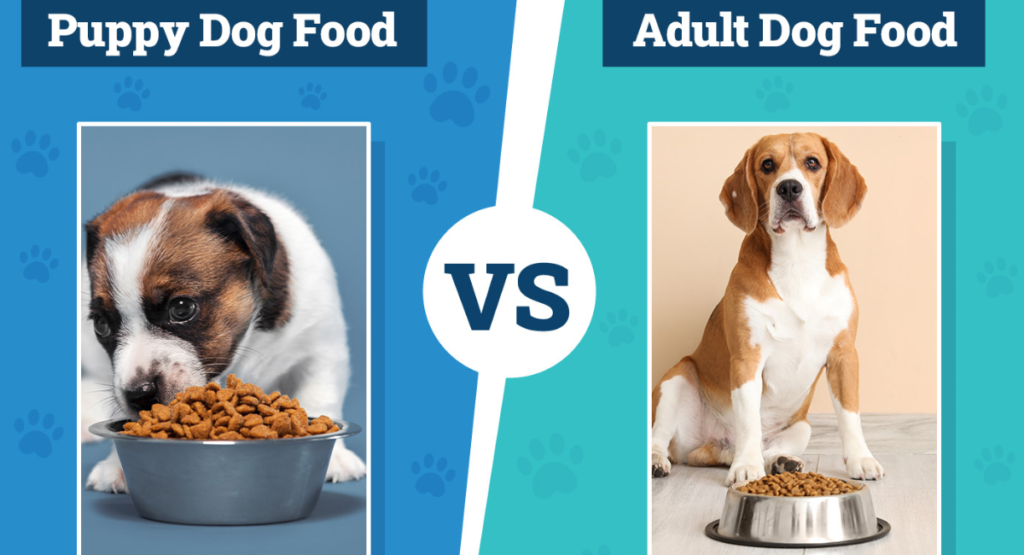
Understanding the difference between life-stage diets is key to choosing the right food.
| Feature | Puppy Food | Adult Dog Food |
|---|---|---|
| Calories | Higher | Moderate |
| Protein | Higher | Balanced |
| Fat | Higher | Controlled |
| Growth Nutrients | High (calcium, DHA) | Maintenance level |
| Purpose | Growth & development | Maintenance |
Detailed Nutritional Comparison: Protein, Calcium & Fat
The AAFCO (Association of American Feed Control Officials) sets minimum nutritional standards for both puppy and adult dog food. Here is how the two compare on the most critical nutrients:
| Nutrient | Puppy Food (AAFCO min) | Adult Dog Food (AAFCO min) | Why It Matters |
|---|---|---|---|
| Crude Protein | 22% | 18% | Puppies need more protein for muscle and organ development |
| Crude Fat | 8% | 5% | Higher fat fuels rapid puppy growth; excess causes obesity in adults |
| Calcium | 1.0% | 0.6% | Too much calcium in adults can cause kidney and joint issues |
| Phosphorus | 0.8% | 0.5% | Must stay balanced with calcium for bone health |
| DHA (Omega-3) | Required | Not required | DHA supports puppy brain and eye development |
| Calories (kcal/cup) | ~400–450 | ~320–380 | Calorie excess in adults leads to weight gain within weeks |
Key takeaway: The higher calcium and phosphorus levels in puppy food are the biggest concern for adult dogs. Long-term overconsumption can stress the kidneys and contribute to joint problems, especially in large breeds.
Breed Size Comparison: How Puppy Food Affects Different Adult Dogs
Not all adult dogs react to puppy food the same way. Breed size plays a major role in how risky occasional or short-term puppy food consumption is. Use this table to understand the risk level for your dog:
| Breed Size | Weight Range | Examples | Risk of Puppy Food | Main Concern | Vet Recommendation |
|---|---|---|---|---|---|
| Toy / Small | Under 20 lbs | Chihuahua, Pomeranian, Shih Tzu | 🟡 Moderate | Very fast weight gain due to tiny body size; small kibble means easy overconsumption | Avoid long-term; short-term occasional use is generally safe |
| Medium | 20–55 lbs | Beagle, Cocker Spaniel, Border Collie | 🟢 Low–Moderate | Calorie excess over time; digestive upset if switched suddenly | Fine occasionally; switch back within a few days |
| Large | 55–100 lbs | Labrador, German Shepherd, Golden Retriever | 🔴 Higher Risk | Excess calcium and phosphorus strains kidneys and joints; obesity risk is significant | Avoid unless prescribed by vet for weight gain or recovery |
| Giant | Over 100 lbs | Great Dane, Saint Bernard, Mastiff | 🔴 High Risk | Joint and skeletal stress from excess calcium; already prone to hip dysplasia | Do not feed puppy food — use giant breed adult formula only |
| Senior (any size) | 7+ years | Any breed | 🔴 High Risk | Slowed metabolism means rapid weight gain; kidneys less efficient at processing excess minerals | Only under direct vet supervision for specific medical needs |
Important: Large and giant breed adult dogs are at the highest risk from puppy food because their bodies are especially sensitive to calcium and phosphorus imbalances. Even a few weeks of regular puppy food feeding can contribute to joint stress in these breeds.
Does the Type of Puppy Food Matter?
Yes, not all puppy foods are the same. Adult dogs may react differently depending on the formula:
Large Breed Puppy Food
- Controlled calcium and phosphorus
- Designed to prevent bone growth issues
- Still calorie-dense for adult dogs
Small Breed Puppy Food
- Very calorie-rich
- Small kibble size
- Can quickly lead to weight gain in adult dogs
Performance Puppy Formulas
- Extremely high energy
- Used for working or sporting puppies
- Not suitable for most adult dogs
When It’s Okay for Adult Dogs to Eat Puppy Food
1. Underweight or Recovering Dogs
Puppy food may be recommended temporarily for:
- Weight gain
- Recovery after illness or surgery
- Increased appetite support
2. Nursing or Pregnant Dogs
Lactating dogs have high energy demands, and puppy food can help support milk production.
3. Highly Active Working Dogs
Some working dogs may benefit from higher calorie intake, though specialized adult performance diets are usually better.
Can Senior Dogs Eat Puppy Food?
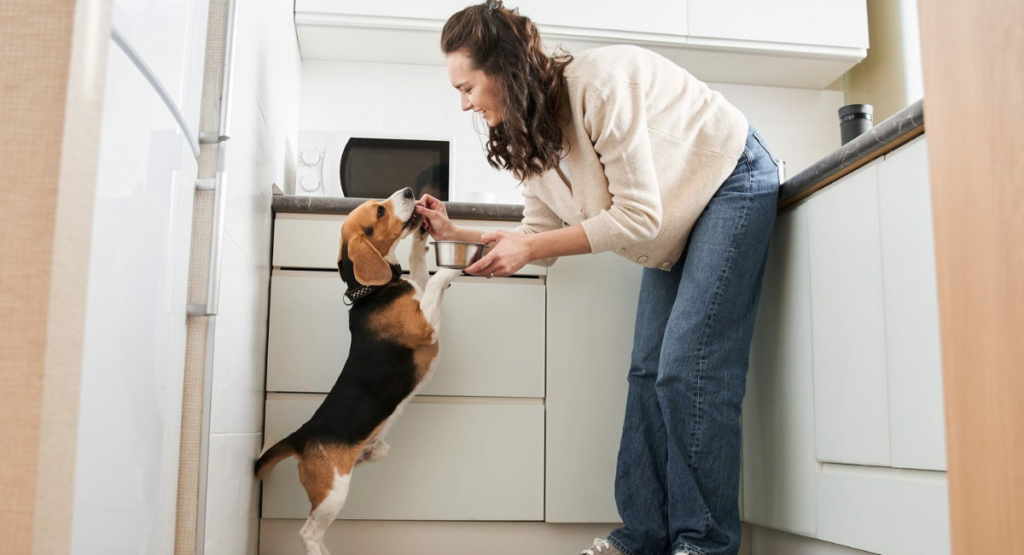
Senior dogs generally do not need puppy food because their metabolism slows down.
However, in special cases such as illness recovery, severe weight loss, or muscle wasting, a veterinarian may recommend temporary use of puppy food. Otherwise, senior dogs are better suited to senior-specific diets designed for joint and mobility support.
How Much Puppy Food Can an Adult Dog Eat?
- Accidental eating: No problem in most cases
- Short-term use (few days): Usually safe
- Long-term feeding: Not recommended due to obesity risk
Studies show that canine obesity affects a significant percentage of pet dogs worldwide, making calorie control essential in daily feeding.
Potential Risks of Long-Term Puppy Food Feeding
Feeding puppy food to adult dogs for long periods may cause:
- Weight gain and obesity
- Joint stress from excess calcium
- Digestive upset
- Nutritional imbalance
- Kidney stress from excess minerals
Obesity in dogs increases risks of diabetes, arthritis, and heart disease.
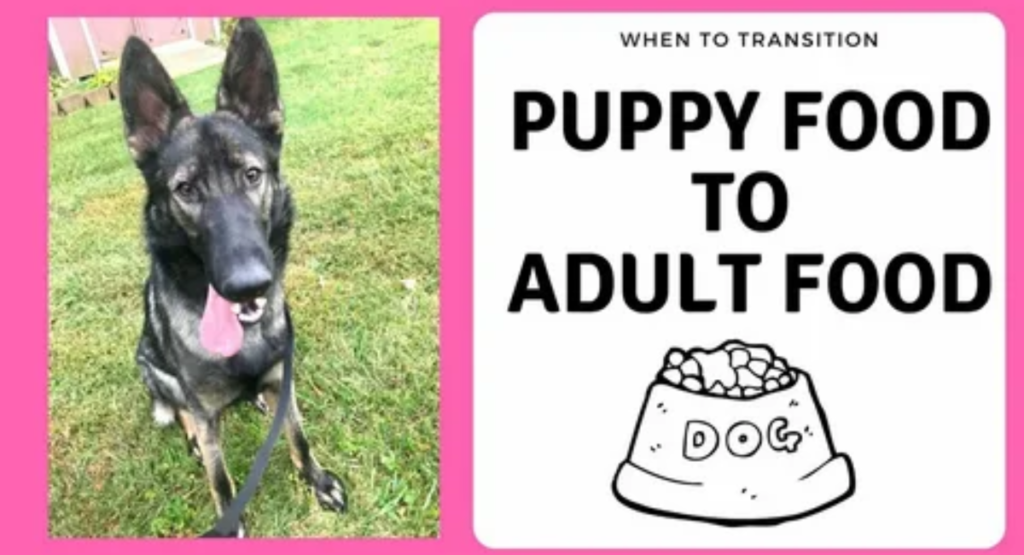
How to Transition from Puppy Food to Adult Food
| Day | Puppy Food | Adult Food |
|---|---|---|
| Day 1–2 | 75% | 25% |
| Day 3–4 | 50% | 50% |
| Day 5–6 | 25% | 75% |
| Day 7 | 0% | 100% |
This gradual process prevents digestive upset and helps your dog adjust smoothly.
Frequently Asked Questions

Puppy food will not immediately harm an adult dog. Occasional or accidental consumption is generally safe. However, feeding puppy food regularly over weeks or months can lead to weight gain, excess calcium buildup, and nutritional imbalance. The risk is higher for large breed and senior dogs whose bodies are more sensitive to the higher mineral and calorie content in puppy formulas.
The right time to switch depends on breed size. Small and toy breeds (under 20 lbs) mature faster and can switch to adult food at around 9–12 months. Medium breeds should switch at 12 months. Large breeds (55–100 lbs) should transition between 12–18 months. Giant breeds (over 100 lbs) may need puppy food until 18–24 months due to their slower growth rate. Always transition gradually over 7 days to avoid digestive upset.
Senior dogs should generally not eat puppy food. As dogs age, their metabolism slows significantly, and their kidneys become less efficient at filtering excess minerals like calcium and phosphorus — both of which are elevated in puppy formulas. The only exception is if a veterinarian specifically recommends puppy food for a senior dog that is severely underweight, recovering from illness, or experiencing muscle wasting.
Yes, puppy food is sometimes used short-term to help underweight adult dogs gain weight because of its higher calorie and protein content. However, this should only be done under veterinary supervision. A better long-term solution for weight gain in adult dogs is a high-calorie adult dog food or a veterinary prescription diet, which provides the extra calories without the excessive mineral levels found in puppy food.
Puppy food contains higher levels of protein (22% minimum vs 18% for adults), fat (8% minimum vs 5%), calcium, phosphorus, and DHA to support rapid growth and brain development. Adult dog food is formulated for maintenance — providing balanced nutrition without the excess calories and minerals that growing puppies need. Feeding an adult dog puppy food long-term is like giving an adult human a child’s growth formula every day — the nutrients simply do not match the body’s needs at that life stage.
Healthier Alternatives for Adult Dogs
Instead of puppy food, consider these better options for adult dogs:
- High-protein adult dog food
- Weight management formulas
- Breed-specific diets
- Vet-prescribed nutrition plans
For dogs that need to gain weight safely, read our complete guide: Best Dog Food for Weight Gain.
For dogs with food sensitivities, see our guide on Limited Ingredient Diet for Dogs.
Conclusion
So, can adult dogs eat puppy food? Yes — but only occasionally or in specific situations such as weight gain recovery, pregnancy, or lactation.
Regular long-term feeding leads to weight gain, kidney stress, and nutritional imbalance. Large breed and senior dogs face the highest risk. Always transition food gradually over 7 days, and consult your veterinarian before making any significant diet change.
For most healthy adult dogs, a balanced life-stage appropriate adult diet is always the best long-term choice.