

You wake up, walk into the kitchen, and there it is — a small pile of bright yellow, foamy liquid on the floor. Your dog is already sitting nearby, tail wagging, looking perfectly fine and ready for breakfast.
Sound familiar? If your dog is vomiting yellow bile in the morning, you are dealing with one of the most common digestive complaints dog owners encounter. And here is the good news: in most cases, the cause is straightforward, the fix is simple, and you can start seeing results tonight.
But “most cases” does not mean all cases. Yellow bile vomiting can also be an early sign of something that needs veterinary attention. This guide will help you tell the difference — and give you everything you need to handle it correctly.
Here is what you will learn:
- What yellow bile actually is and why dogs vomit it
- The most common cause (and a simple fix that works overnight)
- 9 other causes you need to know about
- What competitors miss — the migrating motor complex and pyloric sphincter explained simply
- Age-specific guidance for puppies, adults, and senior dogs
- 7 home remedies that actually work
- Exactly when yellow vomiting becomes an emergency
- A complete FAQ section
What Is Yellow Bile and Why Does a Dog Vomit It?
Before jumping to solutions, it helps to understand what you are actually looking at.
Bile is a digestive fluid produced by the liver and stored in the gallbladder. Its job is to travel into the small intestine and break down fats from food. It is naturally yellow or greenish in color, slightly foamy, and has almost no odor — which is why dog yellow vomit often looks like mustard-colored foam.
Under normal circumstances, bile flows in one direction: from the gallbladder into the small intestine, where it does its job and moves on.
The problem happens when a dog’s stomach has been empty for too long. With no food to process, the stomach sits idle. During this idle period, a process called the migrating motor complex — a wave-like contraction pattern that cleans the gastrointestinal tract between meals — can push bile backward through the pyloric sphincter (the valve between the small intestine and the stomach) into the empty stomach.
Bile is alkaline and highly irritating to the stomach lining. The stomach responds by producing mucus and eventually expelling the bile — which is why your dog throws up yellow foam.
This process is what most competitors describe as simply “bile reflux.” But understanding the actual mechanism — the migrating motor complex and the pyloric sphincter — helps explain why the solutions work and why some dogs are more prone to this than others. It is not a random event. It is a predictable physiological response to an empty stomach.
The #1 Cause: Bilious Vomiting Syndrome (And the Fix Most Articles Miss)
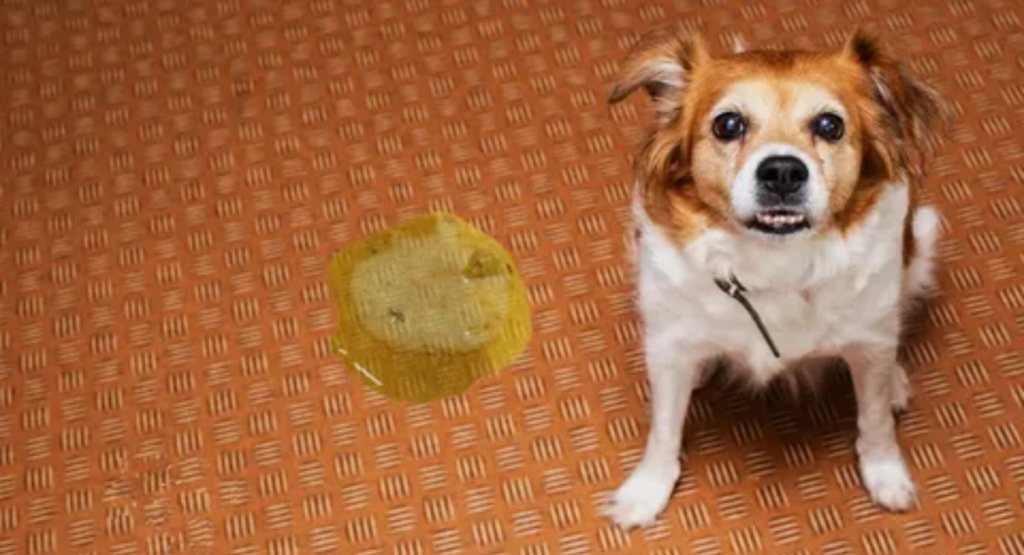
Bilious Vomiting Syndrome (BVS), also called reflux gastritis or hunger pukes, is by far the most common reason for dog vomiting yellow bile in the morning.
The pattern is classic:
- Dog ate dinner at 6 PM
- Dog slept through the night
- Dog wakes at 6 or 7 AM and vomits yellow foam before breakfast
- Dog then eats normally and feels completely fine for the rest of the day
This is BVS. The overnight fast — typically 10 to 14 hours — is long enough for bile to back up into the empty stomach and cause irritation.
The Simple Fix That Works Immediately
Most articles mention feeding more frequently. But the most effective and overlooked solution is this:
Give your dog a small bedtime snack — approximately 30 to 60 minutes before they sleep.
This does not need to be a full meal. A small handful of their regular kibble, a few spoonfuls of plain boiled chicken, or even a plain rice cake is enough to keep something in the stomach overnight. This single change resolves BVS in the majority of dogs within two to three days.
Additionally, if your dog currently eats only once a day, switch to twice daily — morning and evening — or even three smaller meals. The goal is to prevent the stomach from sitting completely empty for extended periods.
The American Kennel Club confirms that a late-night snack is often the first and most effective treatment for BVS, and that veterinary input is only needed when this dietary adjustment fails to resolve the issue.
Why Some Dogs Get BVS and Others Do Not
Not every dog that goes 10 hours without food develops BVS. Some dogs are simply more sensitive — their pyloric sphincter allows bile to reflux more easily, or their migrating motor complex is more active. Certain breeds with naturally sensitive stomachs, including German Shepherds, Boxers, and Bulldogs, appear to be more prone to this condition.
Older dogs are also more commonly affected because the gastrointestinal motility changes with age. If your senior dog is vomiting yellow bile every morning, BVS is one of the first things to consider.
9 Other Causes of Dog Vomiting Yellow Bile
While BVS is the most common cause, it is not the only one. Here are the other reasons your dog may be throwing up yellow bile — including several that competing articles consistently miss.
1. Gastritis (Stomach Inflammation)
Gastritis is inflammation of the stomach lining, and it causes yellow bile vomiting that can happen at any time of day — not just in the morning. Common triggers include eating grass, garbage, rich or fatty human food, or a rapid diet change. Acute gastritis usually resolves within 24 to 48 hours with a bland diet and rest.
2. Pancreatitis
The pancreas sits next to the stomach, and when it becomes inflamed — usually after eating a high-fat meal or table scraps — it can trigger severe nausea and vomiting, including yellow bile.
Pancreatitis vomiting looks different from BVS: it is usually more severe, the dog appears unwell (hunched posture, reluctance to move, painful abdomen), and it does not resolve after eating. According to PetMD, pancreatitis is one of the more serious causes of yellow bile vomiting and requires veterinary treatment.
3. Inflammatory Bowel Disease (IBD)
IBD is a chronic condition where the lining of the gastrointestinal tract becomes inflamed over time. Dogs with IBD vomit yellow bile regularly — sometimes daily — and may also show signs of weight loss, diarrhea, and a generally inconsistent appetite. Unlike BVS, IBD does not resolve with feeding schedule changes and requires diagnosis and long-term management.
4. Intestinal Blockage
A foreign object stuck in the stomach or intestines can cause repeated vomiting of bile as the body tries to clear the obstruction. This is a medical emergency. Signs of a blockage include: repeated vomiting that does not stop, a dog that cannot keep water down, visible abdominal pain, and a hunched or uncomfortable posture.
If you suspect a blockage — especially if your dog is known to chew and swallow toys, socks, bones, or other objects — go to an emergency vet immediately without waiting.
5. Food Sensitivities or Allergies
Some dogs vomit yellow bile regularly because their stomach is chronically irritated by an ingredient in their regular food. Common culprits include chicken, beef, dairy, wheat, and corn. If your dog vomits bile frequently but does not respond to feeding schedule changes, a food elimination trial may reveal an underlying sensitivity.
Signs that food sensitivity may be involved: vomiting is not limited to mornings, the dog scratches more than usual, has loose stools, or has recurrent ear infections alongside digestive issues.
6. Addison’s Disease
This is one cause that almost no competitor article discusses in enough detail — yet it is important. Addison’s disease (hypoadrenocorticism) is a hormonal condition where the adrenal glands fail to produce enough cortisol and aldosterone. One of its symptoms is recurring vomiting, including yellow bile, combined with lethargy, weakness, and loss of appetite.
Addison’s disease is sometimes called “the great pretender” because its symptoms mimic many other conditions. It is diagnosed through bloodwork and hormone testing, and it requires lifelong medication. If your dog vomits yellow bile and also seems generally unwell, lethargic, or weak — especially intermittently — Addison’s disease should be on your vet’s radar.
7. Acid Reflux (GERD in Dogs)
Yes, dogs can get gastroesophageal reflux disease. When the valve between the esophagus and stomach weakens, stomach acid and bile can travel upward, causing irritation, discomfort, and vomiting. Dogs with acid reflux often show signs of discomfort after eating — lip licking, swallowing repeatedly, or regurgitating food shortly after meals, not just in the morning.
8. Parasites
Intestinal parasites — including roundworms, hookworms, giardia, and coccidia — can irritate the gastrointestinal tract and cause vomiting of yellow bile alongside diarrhea, weight loss, and a pot-bellied appearance. This is especially common in puppies and dogs that spend time outdoors or around other animals. Regular deworming is the best prevention.
9. Medication Side Effects
Many common dog medications, including antibiotics, anti-inflammatory drugs, and steroids, can cause nausea and bile vomiting — particularly if given on an empty stomach. If your dog recently started a new medication and is now vomiting yellow bile, always give medications with a small amount of food and contact your vet about adjusting the timing or dosage.
What Competitors Miss: Yellow Bile vs. Yellow Foam vs. White Foam
Most articles treat all yellow vomit the same. But the appearance of what your dog vomits actually carries important diagnostic clues.
| What It Looks Like | What It Likely Means |
|---|---|
| Bright yellow, watery liquid | Pure bile — classic BVS or empty stomach |
| Yellow foamy vomit | Bile mixed with stomach mucus — BVS or gastritis |
| Yellow-green vomit | Bile from deeper in the intestine — more irritation |
| White foam only | Air + stomach mucus — could be acid, bloat, or kennel cough |
| Yellow vomit with undigested food | Food not digesting properly — gastric motility issue |
| Yellow-brown vomit | Bile + partially digested food — GI upset |
| Red or dark brown streaks in any vomit | Blood — emergency, see vet immediately |
This color and texture guide is something none of the top-ranking competitor articles provide clearly — and it is genuinely useful information for a worried dog owner trying to assess what they are dealing with at 6 AM.
Age-Specific Guide: Puppies, Adults, and Senior Dogs
Puppy Throwing Up Yellow Bile
Puppies have smaller stomachs, faster metabolisms, and less capacity to tolerate long fasting periods. A puppy vomiting yellow bile is more urgent than the same symptom in an adult dog.
In puppies, possible causes beyond BVS include:
- Parvovirus — if not fully vaccinated, yellow vomiting alongside lethargy and diarrhea is a red flag for parvo, which is life-threatening without treatment
- Intestinal parasites — puppies are highly vulnerable to worms and giardia
- Hypoglycemia — small or toy breed puppies can develop dangerously low blood sugar if they go too long without eating
For a puppy vomiting yellow bile: Do not wait more than a few hours before calling your vet, especially if any other symptoms are present. Feed three to four small meals per day rather than one or two.
Adult Dog Vomiting Yellow Bile
In a healthy adult dog, occasional yellow bile vomiting — especially if it only happens in the morning — is most likely BVS. Try the bedtime snack solution first. If vomiting does not improve within three to five days, or if other symptoms appear, contact your vet.
A dog vomiting yellow bile every single morning for weeks, even with feeding adjustments, needs a veterinary evaluation to rule out IBD, gastritis, or food sensitivities.
Senior Dog Vomiting Yellow Bile
Senior dogs (generally 7 years and older, or earlier for large breeds) have a higher likelihood of underlying health conditions causing or contributing to their yellow bile vomiting. In older dogs, consider:
- Kidney disease (causes chronic nausea)
- Liver disease (produces excessive bile)
- Cancer (can affect any part of the GI tract)
- Arthritis or pain (stress from pain suppresses appetite and disrupts digestion)
- Cognitive decline (may forget to eat or drink, leading to empty stomach)
A senior dog with new or worsening yellow bile vomiting should be seen by a vet sooner rather than later — within 24 to 48 hours if the vomiting is frequent or combined with other changes.
How to Check If Your Dog Is Nauseous (Before the Vomiting Starts)
This is another section competitors consistently skip — but it is incredibly practical.
Dogs often show signs of nausea before they vomit. If you learn to recognize these early signals, you can sometimes intervene with a small snack before the vomiting happens. Signs of nausea in dogs include:
- Repeated lip licking or smacking
- Swallowing frequently for no apparent reason
- Excessive drooling
- Eating grass (an instinctive attempt to induce vomiting or settle the stomach)
- Restlessness — pacing, unable to settle, getting up and lying down repeatedly
- Yawning excessively
- Looking at their stomach or appearing uncomfortable
If your dog shows these signs in the morning before their breakfast, offer a small piece of plain food immediately. This can sometimes stop the vomiting from happening at all.
7 Home Remedies for Dog Vomiting Yellow Bile
If your dog is vomiting yellow bile but is otherwise acting normally — still drinking water, not lethargic, no other symptoms — these home remedies are safe and effective for mild cases.
1. The Bedtime Snack (Most Effective)
As covered above, this single change works for the majority of BVS cases. Give a small amount of food — a handful of kibble, a few bites of boiled chicken, or a plain rice cake — 30 to 60 minutes before bedtime. This reduces the overnight fasting window and prevents bile from accumulating in the empty stomach.
2. Switch to Smaller, More Frequent Meals
Instead of one or two large meals, feed three or four smaller portions throughout the day. This keeps something in the stomach at all times, reducing the window during which bile can reflux. The total daily food amount stays the same — you are simply dividing it differently.
3. Bland Diet for 24 to 48 Hours
After a vomiting episode, rest the stomach for one to two hours, then offer a plain bland diet:
- Boiled chicken breast (no skin, no seasoning) + plain white rice in a 1:2 ratio
- Plain boiled sweet potato (small amounts)
- Plain pumpkin puree (canned, unsweetened — 1 to 2 tablespoons)
Feed small amounts every three to four hours rather than a normal-sized meal. This allows the stomach lining to settle before returning to regular food.
4. Plain Bone Broth
Low-sodium, onion-free and garlic-free bone broth (or a plain chicken broth made specifically for dogs) can be offered after vomiting to provide hydration and gentle nourishment without overwhelming a sensitive stomach. Pour a small amount over the bland food or offer it separately in a bowl.
5. Slow Feeder Bowl
If your dog eats quickly and then vomits shortly after eating (not necessarily yellow bile, but food vomit), a slow feeder bowl significantly reduces the speed of eating. This prevents the stomach from filling too fast and reduces the chance of regurgitation. It is also helpful for dogs prone to bloat.
6. Move Dinner Time Later
If your dog usually eats at 5 or 6 PM and vomits at 6 or 7 AM, the overnight fast is running 12 to 13 hours. Simply moving dinner to 8 or 9 PM shortens that window and can reduce or eliminate morning bile vomiting without needing to add a separate bedtime snack.
7. Remove Elevated Feeders for Certain Breeds
Elevated feeders were once thought to help prevent bloat in large, deep-chested breeds like Great Danes and Weimaraners. More recent research suggests elevated feeders may actually increase bloat risk in these breeds. If your large or deep-chested dog is vomiting yellow bile, remove the elevated feeder and use a floor-level bowl instead.
Warning Signs: When Yellow Bile Vomiting Is an Emergency
The home remedies above are appropriate for mild, isolated cases. But certain symptoms mean you need veterinary care immediately — do not delay.
Go to an emergency vet or call your vet right away if:
- Your dog is vomiting yellow bile repeatedly (more than two to three times in a few hours)
- The vomiting is combined with diarrhea
- You see blood in the vomit — any red, dark brown, or coffee-ground appearance
- Your dog is also lethargic, weak, or unable to stand properly
- The abdomen appears bloated, distended, or hard
- Your dog is dry heaving or retching without producing vomit (a sign of bloat/GDV — this is a life-threatening emergency)
- Your dog cannot keep water down after vomiting
- The vomiting has continued for more than 24 hours
- A puppy is vomiting yellow bile (always treat urgently)
- A senior dog with known health conditions starts vomiting yellow bile
Bloat (Gastric Dilatation-Volvulus) is the one condition that requires the fastest action. If your dog is dry heaving or retching repeatedly without producing anything, and their abdomen looks bloated, treat this as a life-threatening emergency and go to the nearest emergency vet immediately. Every minute matters.
What Your Vet Will Do
If home remedies do not work, or if the situation seems more serious, here is what to expect at the vet:
Your vet will start with a physical examination — checking vital signs, feeling the abdomen for pain or bloating, and assessing the dog’s overall condition. They will ask about the vomiting pattern, diet, feeding schedule, recent changes, and any other symptoms.
Based on what they find, they may recommend:
- Bloodwork (CBC + chemistry panel): Checks for infection, anemia, kidney and liver function, blood sugar, and electrolytes
- Urinalysis: Checks for urinary tract infections and early kidney disease
- Fecal test: Screens for intestinal parasites
- Abdominal X-rays or ultrasound: Rules out foreign body obstruction, bloat, or organ abnormalities
- Canine pancreatic lipase test (cPLI): Specifically tests for pancreatitis
- Food elimination trial: If food sensitivity is suspected
For uncomplicated BVS, your vet may simply confirm the diagnosis based on the pattern and recommend the dietary adjustments described above, possibly with an antacid medication to reduce stomach acid production overnight.
Feeding Schedule: The Most Practical Fix (That Competitors Explain Poorly)
Almost every article says “feed more frequently.” But none of them give you an actual schedule to follow. Here is one that works:
For a dog currently eating twice daily (morning and evening):
| Time | Feeding |
|---|---|
| 7:00 AM | Regular morning meal (1/3 of daily food) |
| 1:00 PM | Small midday portion (1/3 of daily food) |
| 6:00 PM | Regular evening meal (1/3 of daily food) |
| 9:30 PM | Small bedtime snack (1 to 2 tablespoons of kibble or plain chicken) |
For a dog currently eating once daily:
Switch to at least twice daily immediately. Move one of those meals to just before bedtime. The overnight gap is the most important one to close.
This schedule is the single most effective tool for managing recurring morning yellow bile vomiting. It costs nothing, requires no medication, and most dogs respond within two to three days.
Frequently Asked Questions
FAQ section bohat lamba hai bina subheadings ke. Ye fix karo — har FAQ question ko H3 subheading banao:
✅ Ye Structure WordPress mein Apply Karo
Har question ko H3 set karo, aur answer normal paragraph rahega:
Why does my dog only throw up yellow bile in the morning and then act completely normal?
This is the classic presentation of Bilious Vomiting Syndrome. The overnight fast allows bile to accumulate in an empty stomach, causing irritation and morning vomiting. Once your dog eats breakfast, the stomach has something to process and the bile is neutralized — which is why they seem perfectly fine after eating. Try a small bedtime snack to reduce the overnight fasting window.
My dog throws up yellow bile every single morning. Is this dangerous?
Daily yellow bile vomiting is not immediately dangerous, but it is a sign that something needs to change. Most commonly, it is a feeding schedule issue (BVS). However, if feeding adjustments do not resolve it within a week, your vet should evaluate your dog for other causes like gastritis, IBD, or food sensitivity. Chronic vomiting, even if mild, puts strain on the esophagus and stomach lining over time.
Should I feed my dog after they vomit yellow bile?
If the vomiting appears to be BVS and your dog seems otherwise well, yes — offer a small bland meal after waiting about 30 minutes. Feeding after BVS vomiting actually helps by putting food in the stomach, which neutralizes the remaining bile. For other types of vomiting, rest the stomach for one to two hours, then offer a small bland meal.
Can I give my dog water after vomiting yellow bile?
Yes, but introduce water gradually. Offer small amounts — a few tablespoons every 15 to 30 minutes — rather than letting your dog drink a full bowl at once. Drinking too much too fast after vomiting can trigger more vomiting. Ice chips can also help by slowing intake while keeping the dog hydrated.
What is the difference between yellow bile and white foam?
Yellow bile vomit contains bile — the digestive fluid from the liver. White foam vomit is made of air and stomach mucus without bile, and is usually a sign of an extremely empty stomach, acid production, or in some cases kennel cough. White foam in large amounts combined with non-productive retching and a bloated belly is a warning sign for bloat, which is an emergency.
Why is my puppy throwing up yellow bile?
Puppies vomit yellow bile for the same general reasons as adult dogs — usually an empty stomach — but the situation requires faster action. Puppies cannot go as long without food safely, and their yellow bile vomiting can also be caused by parvovirus, parasites, or hypoglycemia. Contact your vet the same day if a puppy is vomiting yellow bile, especially if other symptoms are present.
What foods can trigger yellow bile vomiting?
High-fat foods (including fatty treats and table scraps) are a major trigger — they can cause acute gastritis or pancreatitis. Sudden diet changes are another common trigger. Certain proteins like chicken or beef can also cause vomiting in dogs with food sensitivities. If yellow bile vomiting started after a diet change, return to the previous food and transition more slowly over 10 to 14 days.
How long should I try home remedies before seeing a vet?
If your dog is otherwise healthy and the vomiting appears to be BVS, give home remedies three to five days. With no improvement after that window — or if any other symptoms develop — call your vet for guidance. A dog that vomits more than twice in a day, shows lethargy, has blood in vomit, or cannot keep water down needs same-day veterinary attention, regardless of how long you have been trying home remedies.
For Food guide:
https://dogpulse.blog/category/dog-food
Final Thoughts
Dog vomiting yellow bile in the morning is alarming the first time it happens — but in most cases, it is a manageable condition with a straightforward fix. The overnight fasting window is the most common culprit, and a simple bedtime snack can resolve the issue in a matter of days.
The key is knowing when morning bile vomiting is just BVS — and when it is something that needs more attention. If your dog vomits yellow bile occasionally, seems fine afterward, and the pattern matches an empty stomach, start with the feeding adjustments in this guide. If the vomiting is frequent, worsening, or accompanied by other symptoms, get your vet involved sooner rather than later.
Your dog depends on you to notice the difference. Now you know exactly what to look for.
Related articles on DogPulse:
- Why Is My Dog Not Eating But Drinking Water? — internal link
- Best Dog Food for Sensitive Stomach and Diarrhea — internal link
- How Long Can a Dog Go Without Eating? — internal link
- Dog Appetite Stimulant Home Remedy — internal link
This article is for general informational purposes and should not replace professional veterinary advice. If your dog is showing concerning symptoms, contact your veterinarian promptly.
More Guide AKC: https://www.akc.org/expert-advice/health/bilious-vomiting-syndrome-in-dogs/