

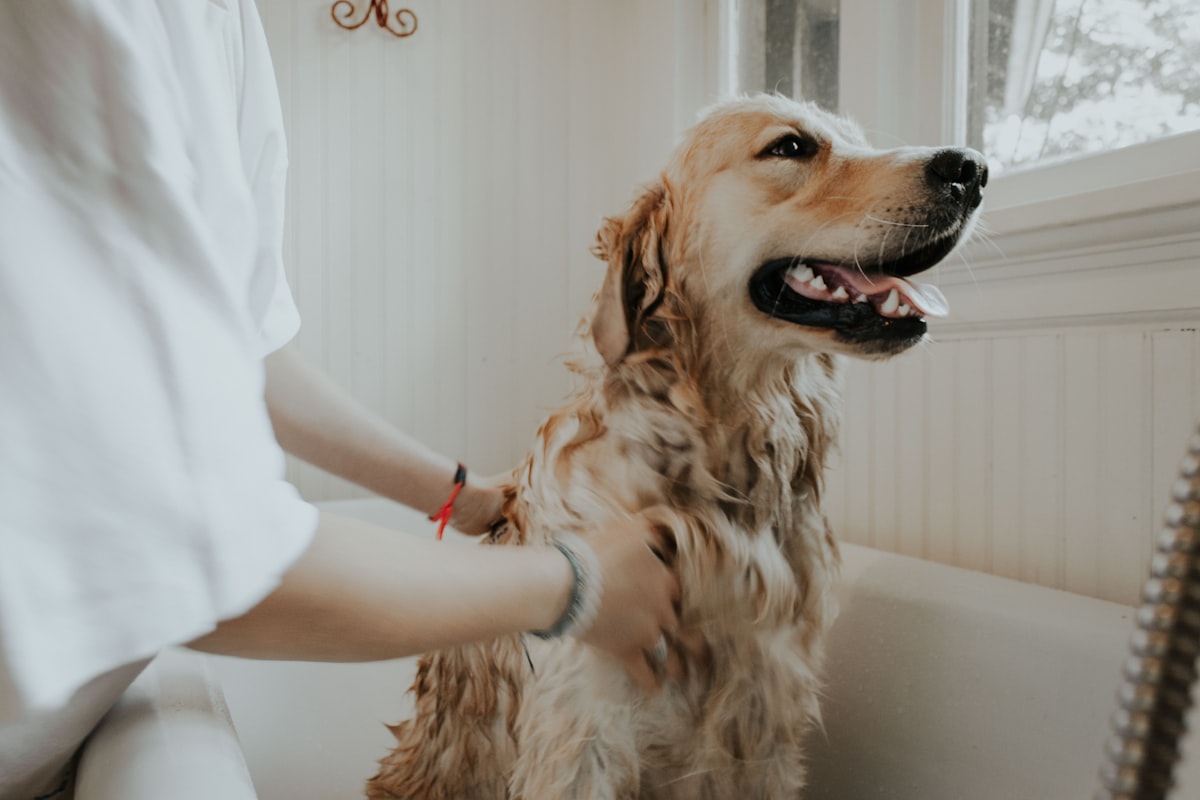
Bringing home a newly adopted dog is one of the most beautiful decisions you’ll ever make. But the first few days? They can feel confusing, even heartbreaking. Your rescue dog might hide, tremble, or refuse to eat. That’s not failure — that’s fear. And fear, with the right approach, is something you can absolutely work through together.
Rescue dog training isn’t about commands or control. It’s about rebuilding safety inside a broken heart. This complete guide walks you through every stage of shelter dog training — from the very first hour to the moment your dog finally exhales without trembling. Let’s begin.
Understanding Rescue Dogs and Their Unique Challenges
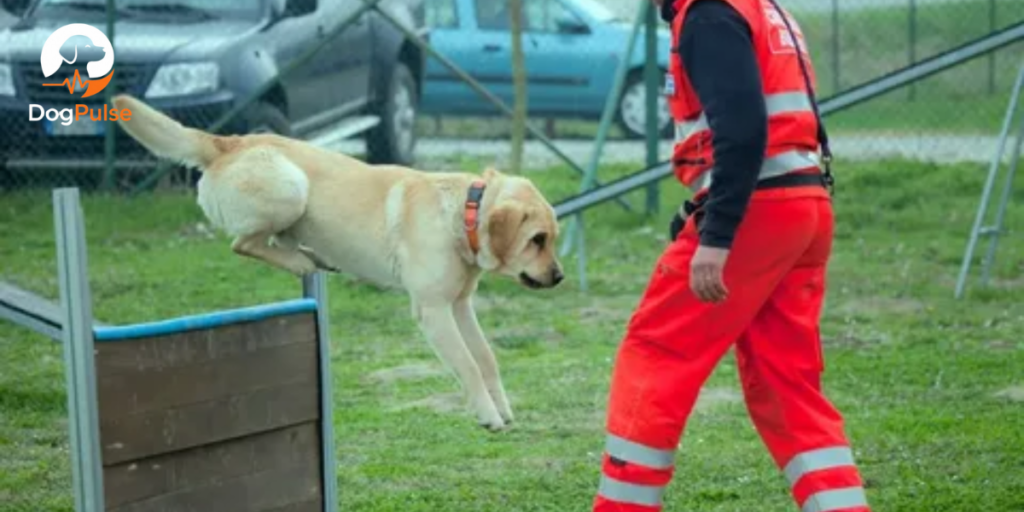
Most people assume a rescue dog is just a regular dog that needs a home. But the reality runs much deeper than that. A dog coming out of a rescue shelter or adoption center has often experienced loss, trauma, neglect, or a complete upheaval of everything familiar. Even dogs from loving foster homes carry the emotional weight of transition. Understanding this from the very start changes how you train, how you respond, and how fast your dog heals.
The dog adoption process doesn’t end when you sign the paperwork. It truly begins the moment your dog steps into your car. Rescue dog training isn’t about dominance or discipline — it’s about communication. Your dog doesn’t yet speak your language. They’re reading every micro-signal you send: your tone, your posture, your pace. The more you understand how shelter dog training differs from raising a puppy from birth, the faster your dog will settle into their new life. According to the ASPCA, approximately 3.1 million dogs enter U.S. shelters every year — and each one of them has a story worth honoring.
Why Rescue Dogs Behave Differently Than Other Dogs

An anxious rescue dog isn’t being stubborn. Their brain has often been rewired by stress and uncertainty. When a dog spends weeks or months in a noisy shelter environment, their nervous system stays in a near-constant state of reactivity. That’s why so many adopted dogs display what looks like bad behavior — barking, chewing, aggression, or complete emotional shutdown — in the first few weeks.
“Dogs don’t misbehave out of spite. They misbehave out of confusion, fear, and unmet needs.” — Dr. Patricia McConnell, certified applied animal behaviorist
Recognizing the difference between trauma response and intentional misbehavior is the single most important shift a new rescue owner can make. A dog that growls when you reach for their bowl isn’t being dominant — they’re displaying resource guarding, a survival behavior born from scarcity. A dog that bolts toward the door isn’t being reckless — they’re anxious and overstimulated. When you stop labeling the behavior as “bad” and start asking “what does this tell me about how my dog feels,” everything changes.
The First 3 Days, 3 Weeks, and 3 Months Rule
Every experienced rescue advocate knows about the 3-3-3 rule — and for good reason. It’s one of the most accurate frameworks for predicting a rescue dog’s adjustment period. It won’t tell you exactly what your dog will do. But it gives you a roadmap so you stop panicking when things feel hard and stop rushing when things feel easy.
The rescue dog first week is rarely representative of who your dog truly is. Many dogs shut down entirely. They won’t eat. They won’t explore. They might just stand or sit in one spot, processing an enormous amount of sensory information. Other dogs go the opposite direction — hyper, frantic, unable to settle. Both responses are completely normal. Your job during this time isn’t to train. It’s to simply be present, calm, and consistent.
What Happens Inside Your Dog’s Mind During the 3-3-3 Period
During the rescue dog first month, something remarkable begins to happen. Your dog starts to map out their environment. They figure out where the food comes from, who the safe humans are, what sounds mean danger and which ones don’t. This is the window where rescue dog trust issues either deepen or begin to heal — and your behavior as an owner makes all the difference.
| Phase | Timeframe | What Your Dog Feels | What You Should Do |
| Overwhelmed | Days 1–3 | Shut down, won’t eat, hides | Give space, speak softly, keep things quiet |
| Exploring | Weeks 1–3 | Testing limits, true personality emerges | Set gentle, consistent boundaries |
| Bonding | Months 1–3 | Relaxing, beginning to trust | Introduce structured rescue dog training |
By the end of month three, most dogs have fully exhaled. They know where they belong. That’s when your deeper rescue dog obedience training can truly take root.
Preparing Your Home Before Training Begins
Rescue dog training doesn’t start with commands. It starts with your environment. Before your dog even arrives, take a walk through your home with fresh eyes — the eyes of a fearful rescue dog entering an unknown space. Where are the loud noises? Where are the bottlenecks? Where could your dog feel cornered or trapped? Addressing these things before Day 1 dramatically reduces stress and sets you both up for success.
Think about the safe space first. Every dog needs one — a quiet corner, a crate with soft bedding, or a sectioned-off room where nobody disturbs them. This isn’t isolation. It’s sanctuary. Dogs are den animals by instinct, and giving them a defined retreat tells them: this place is yours, and you are safe here. The home environment you create in those first days will either accelerate your dog’s healing or slow it down.
Setting Up a Safe Space That Speeds Up the Rescue Dog Training Process
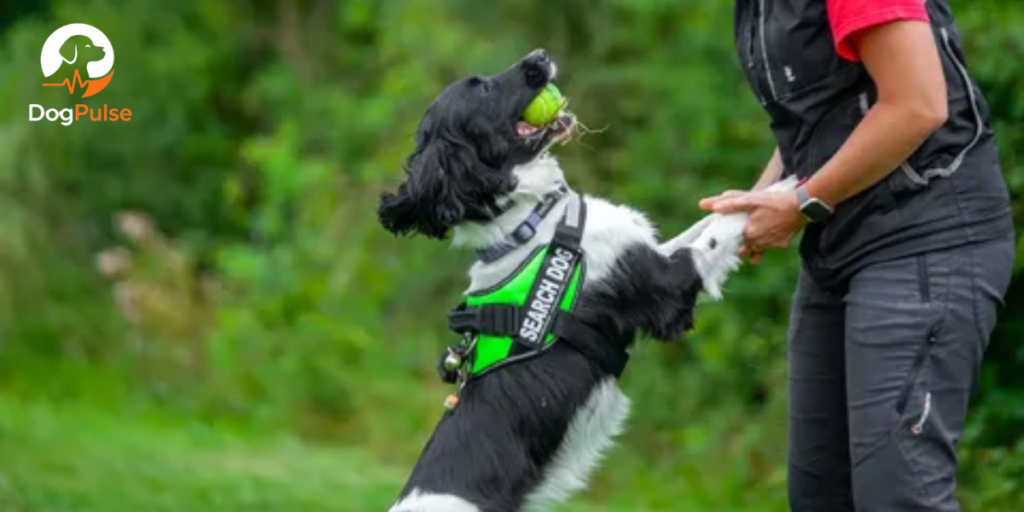
Your gear choices matter more than most new owners realize. A crate used correctly becomes a comfort, not a punishment. A long indoor leash lets you supervise your dog without chasing them. Enrichment activities like puzzle feeders give a fearful rescue dog something productive to focus on — which burns mental energy and reduces destructive behavior at the same time.
| Essential Gear | Why It Helps |
| Crate with soft bedding | Creates a safe space and aids crate training rescue dog |
| Long indoor leash (15 ft) | Allows supervision without pressure |
| Puzzle feeder or Kong | Provides mental stimulation and reduces anxiety |
| Baby gates | Controls access and prevents overwhelming situations |
| DAP/Adaptil diffuser | Releases calming pheromones to reduce nervous behavior |
| Non-slip dog bed | Provides comfort and ownership of a defined space |
Remove anything that could startle your dog unnecessarily. Keep the TV at a low volume. Ask family members to approach calmly. Tell children in the household — gently but clearly — that the dog needs quiet time first. The first 72 hours you spend respecting your dog’s anxiety will pay dividends for months.
How to Build Trust With a Rescue Dog
Dog trust building is not a checklist item. It’s a daily practice, like watering a plant. You don’t pour a gallon on it once and walk away. You show up, consistently, over time. The same principle applies to rescue dog bonding. Your dog is quietly watching everything you do — and every gentle, predictable interaction is a deposit into what trainers call the “trust bank.”
Start with the counter-intuitive approach: do less. The instinct to shower a newly adopted dog with affection is understandable. But for a fearful rescue dog, too much too soon can trigger anxiety rather than relieve it. Give your dog the gift of space. Let them approach you. Sit on the floor nearby and read a book. Let your calm presence become associated with safety, rather than pressure.
The Fastest and Gentlest Ways to Earn a Rescue Dog’s Confidence
Hand-feeding is one of the most powerful dog trust building exercises in existence. Instead of placing your dog’s bowl on the floor, feed small portions from your palm. This creates a direct, positive association between you and something your dog deeply values: food. It also gives you a window into your dog’s comfort level — a dog who eats from your hand is a dog beginning to trust.
| Body Language Signal | What It Means | Your Best Response |
| Whale eye (wide whites visible) | Fear or anxiety | Back away slowly, give space |
| Tail tucked tight | Submission or stress | Crouch down, speak softly |
| Yawning repeatedly | Stress or conflict | Slow the interaction down |
| Stiff, still body | Threat assessment | Stop movement, avert eyes |
| Loose, wiggly body | Relaxed and open | Ideal moment for calm bonding |
| Slow tail wag (low) | Cautious interest | Let dog approach at their pace |
Reading body language accurately is a skill that transforms your training. When you respond correctly to your dog’s signals, they learn that you’re safe — and that’s the foundation every successful rescue dog rehabilitation is built on.
Positive Reinforcement Training for Rescue Dogs
Science has spoken loudly on this one. Reward-based training produces faster, more durable results — especially with dogs who carry trauma. A 2021 study published in PLOS ONE found that dogs trained with aversive methods showed significantly higher levels of stress indicators including yawning, lip licking, and nervous behavior compared to dogs trained using positive reinforcement. For a rescue dog who already walks a behavioral tightrope, punishment-based approaches don’t just slow progress — they actively cause harm.
Positive reinforcement works by pairing a behavior you want with something your dog genuinely loves. The moment they do the right thing, they get a reward. A treat, a burst of praise, a quick game of tug — whatever lights them up. Their brain makes the connection: that thing I just did made something great happen. So they do it again. And again. And again. That’s dog behavior modification at its most elegant.
How Reward-Based Training Rewires a Traumatized Dog’s Brain
Clicker training is a particularly powerful tool for adopted rescue dog owners because it marks the exact moment of correct behavior with a sharp, distinct sound — removing any ambiguity about what earned the reward. The click bridges the gap between behavior and reward, making your training sessions faster and more precise. Even dogs with significant trauma histories respond beautifully to clicker work because it’s completely predictable: click always means reward, every single time.
Dog training rewards don’t have to be fancy. High-value treats like small pieces of chicken, cheese, or freeze-dried liver work best for new rescue dogs who aren’t yet food-motivated in a relaxed home setting. Keep training sessions short — five to ten minutes maximum. Repetition matters far more than duration. Three brief sessions a day beats one long, exhausting one every time. For more on science-backed training methods, the American Veterinary Society of Animal Behavior has an excellent position statement at https://avsab.org.
Essential Commands Every Rescue Dog Should Learn
Every rescue dog deserves a foundation of reliable dog obedience commands — not because obedience makes them easier to live with (though it does), but because knowing what’s expected of them actually reduces anxiety. A dog who understands “sit,” “stay,” and “come” lives in a more predictable world. Predictability is safety. And safety is everything to an anxious rescue dog.
Start with the six commands below — in this order. Each one builds on the last. Don’t rush to the next until your dog responds reliably in a low-distraction environment. Consistency from all family members is non-negotiable. If one person says “down” and another says “off,” your dog isn’t stubborn when they don’t respond — they’re confused.
Teaching Basic Obedience to a Rescue Dog Step by Step
Sit is your starting point. Hold a treat at your dog’s nose and slowly move it back over their head. Their bottom naturally lowers as their nose goes up. The moment they sit, say “yes!” or click and reward. Stay comes next — ask for a sit, hold your palm out flat, say “stay,” step back one step, then return and reward. Build duration in small increments. Never correct a broken stay harshly; just reset and try with less distance.
Recall training — teaching your dog to come when called — is arguably the most critical safety command you’ll ever teach. Practice it inside first, with zero distractions. Call your dog’s name once, say “come” in a happy voice, and reward extravagantly when they arrive. Never call your dog to you for something unpleasant. If you need to do something your dog dislikes, go get them. Protecting the recall command keeps it reliable when it counts most.
| Command | What It Teaches | Quick Training Tip |
| Sit | Impulse control, obedience | Use treat lure over the nose |
| Stay | Patience, self-regulation | Build seconds before distance |
| Come (Recall) | Safety, responsiveness | Always reward heavily — never punish a recall |
| Leave It | Impulse control, safety | Two-hand method: closed fist, then open palm |
| Down | Calm, deference | Lure nose to floor between paws |
| Place/Bed | Settling, calm behavior | Use a defined mat; reward four paws on it |
Common Rescue Dog Behavior Problems and How to Fix Them
That garbage-raiding, couch-destroying, bark-at-everything dog isn’t broken. They’re communicating. Every canine behavior problem you see has a root cause — usually fear, unmet mental stimulation, or a history of needing to compete for resources. The fix is almost never punishment. The fix is almost always addressing what’s underneath the behavior.
Rescue dog separation anxiety is one of the most common challenges new owners face. Your dog has already lost everyone they loved. When you leave, their brain interprets your absence as another abandonment. The barking, the destructive behavior, the pacing — it’s not manipulation. It’s panic. Treating rescue dog separation anxiety requires a graduated approach: practice leaving for just thirty seconds, returning calmly before the dog escalates, and slowly building duration over weeks.
Separation Anxiety in Rescue Dogs — Causes and Real Solutions
Resource guarding is another deeply misunderstood behavior. A dog who growls over their food bowl or a favorite toy isn’t dominant — they’re scared. In a shelter or difficult past environment, resources weren’t guaranteed. The solution is a technique called the “trade-up game.” Approach your dog with something even better than what they have. Offer the trade. Let them take it. Walk away. Over weeks, your approach near their resources becomes a predictor of good things — and the aggression around those resources dissolves.
| Canine Behavior Problem | Root Cause | Proven Solution |
| Separation anxiety | Attachment fear, prior loss | Graduated departures, calming aids, desensitization |
| Resource guarding | Scarcity trauma | Trade-up game, controlled feeding protocols |
| Excessive barking | Anxiety, alerting, boredom | “Quiet” command + reward, enrichment activities |
| Destructive behavior | Under-stimulation, stress | Increase exercise, mental stimulation, structured routine |
| House training regression | Stress, unfamiliarity | Reset potty schedule, supervise closely, no punishment |
| Aggression toward strangers | Fear-based reactivity | Desensitization, counter-conditioning, professional help |
Leash Training a Rescue Dog That Pulls
A dog dragging you down the sidewalk isn’t trying to be the boss. They’re overwhelmed, under-stimulated, or simply untaught. Leash training rescue dog work is one of the most common requests from new adopters — and thankfully, it responds beautifully to consistency and the right technique. Loose leash walking is a learnable skill. It just takes patience and a good strategy.
The biggest mistake in leash training is letting the pulling work. If your dog pulls and you follow, you’ve just taught them that pulling gets them where they want to go. The moment you feel tension on the leash, stop completely. Stand still. Wait. The moment your dog looks back at you or the leash goes slack, mark it with “yes!” and move forward. You’re teaching your dog that a loose leash walking posture is what makes the walk happen.
Step-by-Step Loose Leash Walking for Rescue Dogs
Start every walk with two minutes of calm. Don’t march straight out the door into stimulation. Let your dog sniff the front step. Let their nervous system settle. For a reactive rescue dog, the first thirty seconds outside are the most overwhelming — so don’t rush through them. A front-clip harness redirects pulling naturally by turning your dog toward you when they lunge forward, making it one of the most effective tools for leash training rescue dog work without any force or discomfort.
Retractable leashes are one of the most common mistakes in leash training rescue dog households. They teach your dog that constant tension on the leash is normal — which is the exact opposite of what you’re trying to build. Use a standard 4–6 foot flat leash instead. Control is communication. A consistent leash length tells your dog exactly where the boundary is.
| Leash Training Method | How It Works | Best For |
| Stop-and-stand | Freeze when leash tightens, move when slack | Most rescue dogs learning leash manners |
| Direction change | Turn and walk opposite way when dog pulls | High-energy, reactive rescue dog |
| “Touch” cue | Teach nose-to-hand target; use to redirect | Fearful rescue dog who shuts down outdoors |
| Treat lure at hip | Reward dog for walking beside you | Dogs who are food-motivated |
Socializing a Rescue Dog Safely
Rescue dog socialization is not a single event. It’s a long, carefully paced process of introducing your dog to the world in a way that builds confidence rather than flooding them with stress. The biggest mistake new owners make is moving too fast. They take their dog to a dog park in week two, surrounded by strangers and unfamiliar other dogs, and wonder why their dog shuts down or snaps. That’s not socialization. That’s overwhelming.
True rescue dog socialization starts below the threshold — the point at which your dog notices something but hasn’t yet reacted to it. If your dog can see a stranger across the street and stay calm, that’s below threshold. If they lunge and bark, they’ve crossed it. Your goal is to accumulate thousands of positive exposures below threshold over months. Each one tells your dog’s nervous system: that thing out there isn’t a threat.
How to Socialize a Fearful or Reactive Rescue Dog Without Forcing It
Exposure should be gradual and intentional. Begin with low-intensity stimuli: the sound of children playing outside, the sight of strangers walking past at a distance, the presence of calm other dogs separated by a fence. Never force your dog toward something that’s triggering fear. “Flooding” — deliberately overwhelming a dog with the thing they fear — is not only ineffective for rescue dog rehabilitation, it often makes the situation significantly worse.
One of the most powerful rescue dog socialization tools is parallel walking. Rather than introducing two dogs face-to-face — which is inherently confrontational in dog language — walk them side by side at a comfortable distance. Let them be aware of each other without pressure. Slowly close the gap over multiple sessions. This mirrors how dogs naturally build relationships in the wild: through shared, low-stakes experiences rather than forced proximity.
| Socialization Stage | Description | Pacing Guideline |
| Sound exposure | Traffic, kids, music played at low volume | Week 1–2 |
| Visual exposure | Watching people/dogs from a distance | Week 2–4 |
| Proximity (strangers) | Allowing calm strangers to exist nearby | Week 3–6 |
| Dog-to-dog (parallel) | Walking beside a calm dog | Week 4–8 |
| Off-leash play | Supervised play with one familiar dog | Month 2–3+ |
Creating a Daily Routine for Faster Training Success
Predictability is your rescue dog’s most powerful medicine. A dog who knows when they’ll eat, walk, play, and sleep lives with dramatically less anxiety than one whose day is unpredictable. The rescue dog routine you establish in the first weeks doesn’t just make training easier — it communicates to your dog that this home is safe, organized, and permanent. That’s a message they desperately need to hear.
Building a dog training schedule doesn’t require military precision. It just requires consistency. Feed at the same times each day. Walk at similar times. Run short training sessions at predictable intervals. When your dog can accurately predict what comes next, their nervous system stops running threat assessments every hour — and instead, it relaxes. A relaxed dog learns faster, bonds deeper, and recovers from setbacks more quickly.
A Sample Daily Schedule That Accelerates Rescue Dog Training Results
The structure below works for most adopted rescue dog owners in the USA. Adjust it based on your work schedule and your dog’s specific needs — but keep the core pattern stable across all seven days of the week.
| Time | Activity | Training Purpose |
| 7:00 AM | Morning walk + potty | Energy release, leash manners practice |
| 7:30 AM | Breakfast (hand-fed or bowl) | Rescue dog bonding, routine reinforcement |
| 8:00 AM | 5–10 min training session | Obedience skill building |
| 12:00 PM | Puzzle feeder or Kong | Mental stimulation, independent settling |
| 3:00 PM | Short walk or backyard sniff | Enrichment, mid-day reset |
| 6:00 PM | Dinner | Routine reinforcement |
| 6:30 PM | Play + 5–10 min training | Bond strengthening, reward-based training |
| 8:30 PM | Calm wind-down | Prepares nervous system for rest |
| 9:00 PM | Crate or bed for the night | Crate training rescue dog, sleep routine |
Advanced Training and Confidence Building
Once your rescue dog has mastered the basics and settled into their routine, something exciting becomes possible: growth. Real, visible, joyful growth. Rescue dog confidence building through advanced activities isn’t just about tricks. It’s about giving your dog a way to succeed — repeatedly, enthusiastically — in a world that previously gave them very few wins.
Nose work is one of the most transformative activities for a fearful rescue dog. Dogs live primarily through scent, and giving them structured opportunities to use their nose — searching for hidden treats or scented objects — taps into something deep and satisfying. Dogs who were once too anxious to engage with the world will often throw themselves into nose work with surprising enthusiasm. It builds confidence because the dog controls the pace and earns clear, unambiguous rewards for success.
Fun Activities That Build a Rescue Dog’s Confidence Fast
Agility foundations — low jumps, short tunnels, balance boards — offer another brilliant avenue for rescue dog confidence building. You don’t need a full agility course. A broom handle balanced between two stacks of books and a kids’ tunnel from a toy store are enough to get started. What matters is the experience of attempting something, succeeding, and receiving celebration from you. Each successful repetition wires in a little more confidence and a little less fear.
The AKC’s Canine Good Citizen (CGC) program is an outstanding goal for rescue dog training graduates. It tests ten real-world behaviors — sitting politely for petting, walking on a loose leash, staying calm around strangers and other dogs — and awards a formal certificate upon passing. For an adopted rescue dog, earning that certificate isn’t just a training milestone. It’s proof of how far they’ve come. Learn more at https://www.akc.org/products-services/training-programs/canine-good-citizen/.
When to Work With a Professional Dog Trainer
There’s no weakness in asking for help. The most dedicated rescue dog owners are often the ones who recognize when they’ve hit their limit — and reach out to a professional before the situation worsens. If your dog displays aggression toward family members, intense rescue dog separation anxiety that isn’t responding to home protocols, or reactivity that makes daily life unsafe, please don’t wait. A qualified trainer can change the trajectory of your entire relationship.
Choosing the right trainer is as important as choosing to seek help at all. The rescue dog training world is unfortunately not uniformly regulated — anyone can call themselves a dog trainer, regardless of education or ethics. Look for certifications from organizations that mandate science-based, force-free methods: CPDT-KA (Certified Professional Dog Trainer – Knowledge Assessed) or a Fear Free Certified Professional are your two strongest indicators of competent, humane practice.
How to Choose the Right Trainer for a Rescue Dog
Avoid any trainer who recommends choke chains, prong collars, or shock collars for a rescue dog or fearful rescue dog. These tools operate through pain and intimidation — the precise opposite of what a dog with trauma needs. A good trainer welcomes your questions, explains the “why” behind every technique, and never makes you feel rushed or foolish for asking. They should be your ally, not an authority figure who demands blind compliance.
| Green Flags | Red Flags |
| CPDT-KA or Fear Free certified | Uses punishment, dominance theory |
| Welcomes observation of sessions | Won’t let you watch training |
| Explains the science behind methods | Guarantees results in unrealistic timelines |
| Force-free, positive reinforcement based | Recommends prong, choke, or shock collars |
| Tailors plan to your dog’s history | Uses one-size-fits-all approach |
Find a certified trainer near you through the directory at https://www.ccpdt.org.
Rescue Dog Training Mistakes That Slow Progress
Even the most devoted adopters make mistakes. That’s part of the process. But some mistakes cost more time and trust than others — and knowing what they are lets you sidestep them before they set you back weeks. The most common mistake isn’t being mean or careless. It’s being impatient.
Moving too fast through commands is the training equivalent of building a house on wet concrete. The foundation looks fine — until you add weight, and everything shifts. If your dog can sit in your kitchen but not at the park, they haven’t learned “sit.” They’ve learned “sit when there are no distractions.” That’s the beginning — not the finish line. Slow down. Proof each behavior across multiple environments and distraction levels before calling it learned.
The Biggest Mistake New Rescue Dog Owners Make in the First Month

Inconsistency among family members is the silent killer of rescue dog training progress. If one person allows the dog on the couch and another scolds them for it, your dog isn’t being difficult when they try both ways — they’re genuinely confused about the rules. Every human in the household must agree on the household rules before training begins and enforce them calmly and consistently every day.
| ❌ Common Mistake | ✅ Better Approach |
| Skipping the decompression period | Honor the 3-3-3 rule; don’t rush into training |
| Punishing house training accidents | Calmly redirect; increase supervision and routine |
| Using punishment or harsh corrections | Use positive reinforcement exclusively with rescue dogs |
| Forcing affection on a fearful rescue dog | Let the dog approach on their terms |
| Comparing your dog to others | Every rescue dog has a unique timeline |
| Flooding with socialization too early | Introduce stimuli gradually, below threshold |
| Inconsistent rules across family members | Align everyone on household rules before Day 1 |
Frequently Asked Questions About Rescue Dog Training

There’s no single answer. A rescue dog’s adjustment period typically spans three to six months for basic settling, but genuine obedience and behavioral stability often take six months to a full year. Rescue dog rehabilitation for dogs with significant trauma histories may take longer — and that’s completely okay.
Different, not necessarily harder. Puppies are blank slates but wildly impulsive. Rescue dogs often have ingrained habits to work through — but adult dogs also have longer attention spans and impulse control. Many adopters actually find shelter dog training more straightforward than puppy raising.
Positive reinforcement and reward-based training, always. The evidence is unambiguous. Force-free methods build trust and reduce anxiety — the two things a rescue dog needs most.
Absolutely. The old saying “you can’t teach an old dog new tricks” is simply not true. Older dogs are often more focused and less distracted than puppies. With consistency and positive reinforcement, senior rescue dogs can learn every dog obedience command on your list.
A dog refusing food is almost always a sign of stress or anxiety. Don’t interpret it as pickiness. Try higher-value rewards (real chicken, cheese), feed in a quieter location, or simply wait. As your dog’s anxiety decreases over the rescue dog adjustment period, their appetite — and food motivation — will return.
Yes, for most dogs. A crate used correctly becomes a beloved safe space, not a punishment. It aids rescue dog house training, manages destructive behavior when unsupervised, and gives your dog an emotional anchor when the world feels overwhelming.
First, understand that rescue dog aggression is almost always rooted in fear. Work with a qualified positive reinforcement trainer immediately. Do not use punishment — it escalates fear-based reactivity. Management (preventing situations that trigger aggression) combined with counter-conditioning is the proven path forward.
Final Thoughts: Helping Your Rescue Dog Thrive for Life

There will be a day — you might not even notice it at first — when your dog exhales without trembling. When they walk through the front door instead of cowering behind it. When they wag their tail at a stranger instead of shrinking away. That day comes from everything you’ve done: the patience, the consistency, the hundred small choices to respond with kindness instead of frustration.
Rescue dog training is not a sprint. It’s the long game — and it’s one of the most meaningful things you’ll ever commit to. Every dog who comes out of a rescue shelter or adoption center deserves an owner willing to show up, day after day, even when progress feels invisible. Because progress is always happening, even when you can’t see it. You are rewiring a brain shaped by fear. You are replacing trauma with trust. You are giving a living creature something they may never have had before: a safe, predictable, loving home.
Keep going. Your dog is watching — and every gentle, patient, consistent day you give them is a day that changes their life forever. Explore more expert guides on DogPulse.blog to continue your journey as a confident, compassionate dog owner. 🐾