


Quick Answer
Yes, dogs can eat dragon fruit. The soft, sweet flesh of red, pink, white, and yellow dragon fruit is non-toxic to dogs and safe in small, occasional amounts. Always remove the tough outer skin first, cut the flesh into bite-sized pieces, and introduce it slowly. The black seeds are safe to eat, but the skin should always be discarded because it’s difficult to digest and offers no nutritional value. Because dragon fruit is naturally high in sugar and fiber, it should stay an occasional treat rather than a daily addition to your dog’s diet.
If your dog already grabbed a piece off the counter, don’t panic — dragon fruit is not on the ASPCA’s toxic food list, and a small taste is unlikely to cause more than mild, temporary stomach upset.
Key Takeaways
- Dragon fruit (pitaya) is safe for dogs in all common color varieties — red, pink, white, and yellow.
- Always remove the skin. It’s tough, hard to digest, and not meant to be eaten by dogs or people.
- The seeds are safe and don’t need to be removed or strained out.
- Moderation matters — dragon fruit is high in natural sugar and fiber, so overfeeding can cause loose stools or diarrhea.
- Never feed dried, candied, or syrup-packed dragon fruit products — these often contain added sugar or xylitol, a sweetener that is highly toxic to dogs.
- Puppies, diabetic dogs, and dogs with sensitive stomachs should only get dragon fruit with a veterinarian’s go-ahead.
- A few small cubes is plenty for most dogs — treats, including fruit, should stay under 10% of daily calorie intake.
Table of Contents
- What Is Dragon Fruit?
- Can Dogs Eat Dragon Fruit? The Full Answer
- Dragon Fruit Nutrition Facts for Dogs
- Health Benefits of Dragon Fruit for Dogs
- Can Dogs Eat Dragon Fruit Skin?
- Can Dogs Eat Dragon Fruit Seeds?
- Red, Pink, White & Yellow Dragon Fruit — Does Color Matter?
- How Much Dragon Fruit Can a Dog Eat?
- How to Prepare and Serve Dragon Fruit to Your Dog
- Risks and Side Effects to Watch For
- Dragon Fruit vs. Other Dog-Safe Fruits
- Special Cases: Puppies, Seniors, Diabetic & Sensitive Dogs
- Signs of an Allergic Reaction
- Expert Tips
- Common Mistakes to Avoid
- Real-Life Example
- Best Practices Checklist
- FAQs
- Conclusion
What Is Dragon Fruit?
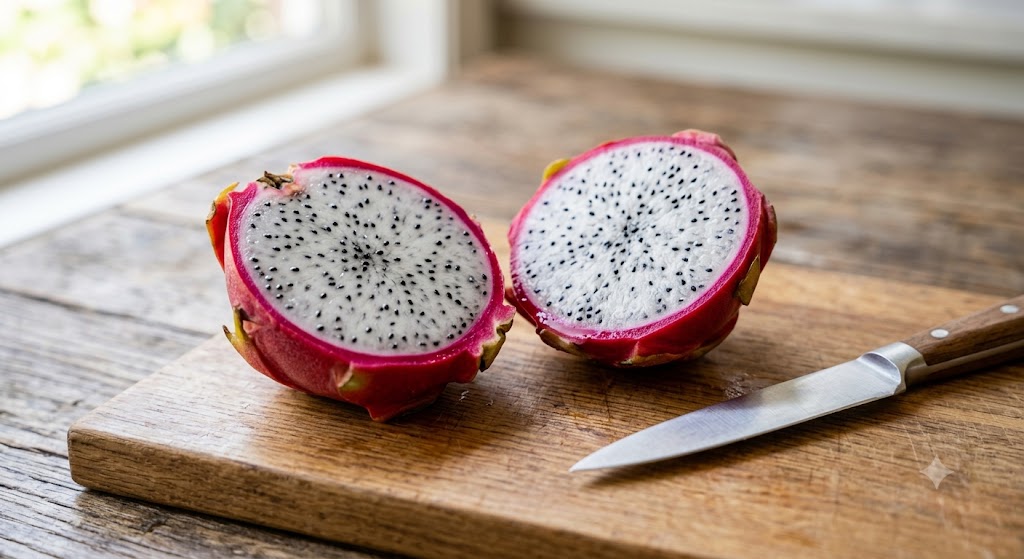
Dragon fruit — also called pitaya or pitahaya — is the fruit of a climbing cactus native to Central and South America, now widely grown across Southeast Asia. It gets its name from the leathery, bright pink or yellow skin covered in leaf-like scales that make it look almost mythical sitting in the produce aisle.
Slice one open and you’ll find soft, juicy flesh speckled with tiny black seeds — white flesh in the most common variety, magenta or deep pink in others, and occasionally a milder yellow-skinned type. The texture is often compared to a cross between a kiwi and a pear, with a very mild, slightly sweet flavor.
Because it looks so unusual, it’s completely reasonable for a dog owner to pause before sharing it. The good news: dragon fruit belongs to the small club of “exotic-looking but genuinely dog-safe” fruits.
Can Dogs Eat Dragon Fruit? The Full Answer
Yes. Dragon fruit is not toxic to dogs in any of its common forms. Veterinary and canine nutrition sources agree that the flesh is safe to feed in moderation, and unlike many exotic fruits, dragon fruit doesn’t carry the hidden dangers found in foods like grapes, cherries, or unripe stone fruits.
That said, “safe” doesn’t mean “unlimited.” Three things matter every time you feed it:
- Preparation — skin off, seeds are fine, flesh cut into manageable pieces.
- Portion — small amounts relative to your dog’s size.
- Plain — no sugar, honey, yogurt drizzle, or chocolate dips. Just the fruit.
If you’re specifically wondering “can my dog eat dragon fruit” after catching them sniffing your fruit bowl, or “can dogs eat dragon fruit skin” because a piece with the peel still on went missing, the short version is: the flesh is fine, the skin isn’t ideal but isn’t an emergency, and one accidental bite rarely causes serious harm.
Dragon Fruit Nutrition Facts for Dogs
Here’s what’s actually inside a typical ½-cup (about 100g) serving of raw dragon fruit flesh:
| Nutrient | Amount (approx.) | Why It Matters for Dogs |
|---|---|---|
| Calories | ~60 kcal | Low-calorie treat option |
| Water content | ~85% | Supports hydration |
| Fiber | ~1.5–3g | Aids digestion, can also cause loose stools if overfed |
| Sugar | ~8–13g | Needs moderation, especially for overweight or diabetic dogs |
| Vitamin C | Present | Antioxidant support (dogs make their own, but extra doesn’t hurt) |
| Magnesium | Present | Supports bone and cardiovascular health |
| Iron | Present | Supports healthy blood cells |
| Omega-3 & Omega-6 fatty acids | Trace amounts | Support skin and coat health |
| Fat | Very low | Won’t contribute meaningfully to weight gain in small amounts |
Values vary slightly by dragon fruit variety and ripeness.
Health Benefits of Dragon Fruit for Dogs

1. Hydration
With roughly 85% water content, a few chunks of dragon fruit can be a refreshing way to support hydration, especially on hot days or for dogs who don’t drink enough water on their own.
2. Digestive Support from Fiber
The fiber in dragon fruit can help support regular bowel movements when fed in appropriate amounts. This is a double-edged sword, though — too much fiber at once tends to backfire (more on that in the risks section).
3. Immune Support from Vitamin C
Dogs can synthesize their own vitamin C in the liver, so they don’t strictly need it from food. Still, the extra antioxidant boost from dragon fruit’s vitamin C content may offer some added immune support, particularly for senior dogs or dogs recovering from illness.
4. Coat and Skin Health
The small amounts of omega-3 and omega-6 fatty acids found in dragon fruit contribute to skin and coat health, similar to the benefits seen with fish oil supplements — though at a much smaller scale.
5. Bone and Heart Support from Magnesium
Magnesium plays a role in bone strength, nerve function, and heart health. A few bites of dragon fruit won’t replace a balanced diet, but it’s a nice nutritional bonus.
6. Antioxidant Protection
The vibrant pigments in pink and red dragon fruit (called betalains) function as antioxidants, which help neutralize free radicals and may support overall cellular health.
Can Dogs Eat Dragon Fruit Skin?
No — the skin should always be removed before feeding dragon fruit to a dog.
While the skin itself isn’t classified as toxic, it is:
- Tough and leathery, making it hard to chew and digest
- A potential choking hazard, especially for small dogs
- Nutritionally empty — it offers no benefit worth the risk
If your dog manages to swallow a small piece of skin, it will likely just pass through the digestive tract, possibly causing mild stomach upset. But large pieces can contribute to a gastrointestinal blockage, which is a genuine emergency. If your dog has eaten a significant amount of the tough outer skin and is vomiting, straining, or seems lethargic, contact your veterinarian right away.
Can Dogs Eat Dragon Fruit Seeds?
Yes. Unlike many fruit seeds (apple, cherry, or peach pits, for example), dragon fruit seeds are completely safe for dogs. They’re tiny, soft, and edible — there’s no need to strain, scoop, or remove them before serving. In fact, trying to separate them from the flesh isn’t practical, since they’re distributed throughout the fruit.
This is one of the reasons dragon fruit is considered lower-risk than many other exotic fruits: no deseeding step, no toxic pit, no choking concern from the seeds themselves.
Red, Pink, White & Yellow Dragon Fruit — Does Color Matter?
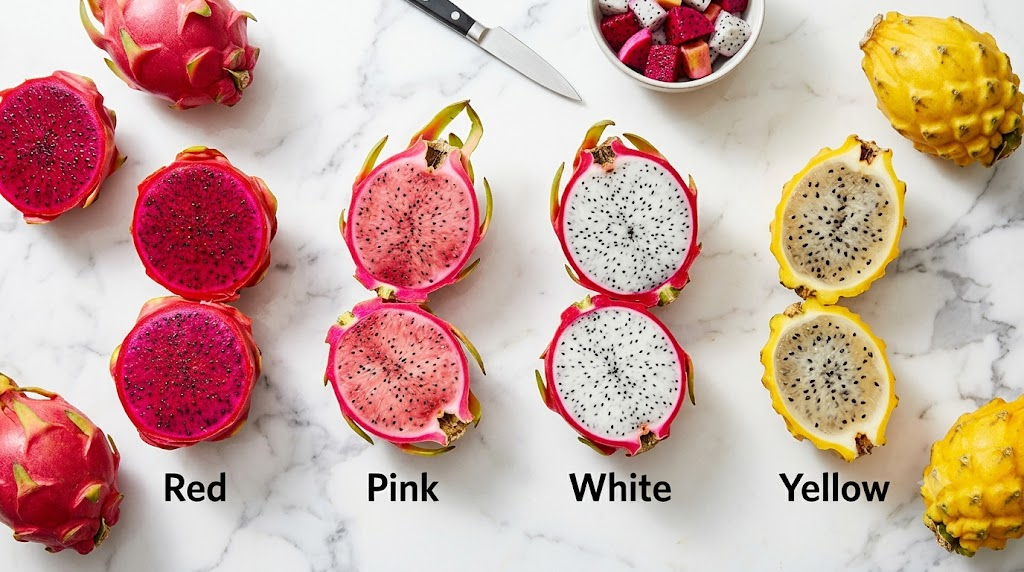
A common question is whether can dogs eat white dragon fruit differs from red or can dogs eat yellow dragon fruit. The answer: all common varieties are safe.
| Variety | Flesh Color | Notable Trait | Safe for Dogs? |
|---|---|---|---|
| Hylocereus undatus | White flesh, pink skin | Mildest flavor, most common | Yes |
| Hylocereus costaricensis | Deep magenta/red flesh | Higher antioxidant (betalain) content | Yes |
| Hylocereus polyrhizus | Pink flesh, pink skin | Sweeter taste | Yes |
| Selenicereus megalanthus | White flesh, yellow skin | Highest vitamin C among varieties | Yes |
Regardless of color, the same rules apply: remove the skin, serve the flesh plain, and stick to small portions.
How Much Dragon Fruit Can a Dog Eat? {#how-much}
Portion size should scale with your dog’s body weight. As a general treat guideline (treats should never exceed roughly 10% of daily calories):
| Dog Size | Suggested Serving |
|---|---|
| Small (under 20 lbs) | 1–2 small cubes (about ½ inch) |
| Medium (20–50 lbs) | 3–5 small cubes |
| Large (50–90 lbs) | 5–8 small cubes |
| Giant (90+ lbs) | Up to ¼ cup, cut into pieces |
Start with a single small piece the first time you offer dragon fruit, then wait 24 hours to watch for any digestive changes before offering more.
How to Prepare and Serve Dragon Fruit to Your Dog
- Choose a ripe fruit. It should give slightly when pressed, similar to a ripe avocado or kiwi.
- Wash it thoroughly to remove any pesticide residue, even though you won’t eat the skin.
- Cut the fruit in half and scoop out the flesh with a spoon.
- Discard the skin entirely.
- Cut the flesh into small, bite-sized cubes appropriate to your dog’s size — this reduces choking risk.
- Serve plain, either on its own, mixed into their regular food, or frozen into small training-treat-sized pieces for a hot-weather snack.
- Avoid any add-ins — no sugar, honey, chocolate, yogurt drizzle, or granola toppings.
Risks and Side Effects to Watch For
High Sugar Content
Dragon fruit is naturally sweet. Overfeeding it — especially in dogs who are overweight, prediabetic, or diabetic — can contribute to blood sugar spikes and unwanted weight gain over time.
Digestive Upset
The same fiber that supports digestion can cause loose stools, gas, or diarrhea if a dog eats too much, particularly the first time they try it.
Choking Hazard from the Skin
As covered above, the tough peel is a choking and blockage risk and should never be fed.
Allergic Reactions
True allergies to dragon fruit are uncommon but possible. Watch for itching, facial swelling, hives, vomiting, or diarrhea after the first few servings.
Pesticide Residue
Choosing organic dragon fruit when available, and washing it thoroughly before cutting, reduces the chance of pesticide exposure — even though the skin itself is discarded.
Processed Dragon Fruit Products
Freeze-dried, canned in syrup, or candied dragon fruit snacks often contain added sugar or artificial sweeteners like xylitol, which is highly toxic to dogs even in small amounts and can cause a life-threatening drop in blood sugar. Only fresh, plain dragon fruit is recommended.
Dragon Fruit vs. Other Dog-Safe Fruits

| Fruit | Sugar Level | Fiber | Prep Needed | Good For |
|---|---|---|---|---|
| Dragon fruit | Moderate-high | Moderate | Remove skin | Hydration, antioxidants |
| Blueberries | Low | Moderate | None | Low-calorie treat, antioxidants |
| Watermelon | Moderate | Low | Remove seeds & rind | Hydration on hot days |
| Apple slices | Moderate | Moderate | Remove seeds & core | Fiber, vitamin C |
| Banana | High | Moderate | Remove peel | Potassium, quick energy |
| Strawberries | Moderate | Moderate | Remove leafy top | Vitamin C, fiber |
If your dog struggles with weight management, lower-sugar options like blueberries may be a better everyday choice, with dragon fruit reserved as an occasional novelty treat.
Special Cases: Puppies, Seniors, Diabetic & Sensitive Dogs
- Puppies: It’s best to wait until a puppy’s digestive system is more developed before introducing dragon fruit or any new treat food. Talk to your veterinarian about appropriate timing based on breed and age.
- Senior dogs: Generally fine in small amounts, but keep portions minimal if your senior dog has reduced kidney function or is managing weight.
- Diabetic dogs: Because of the natural sugar content, diabetic dogs should only be given dragon fruit — if at all — under direct veterinary guidance.
- Dogs with sensitive stomachs or IBD: Start with an extremely small amount, or skip it altogether if your dog has a history of food-related digestive flare-ups.
Signs of an Allergic Reaction
After the first time your dog tries dragon fruit, monitor for:
- Facial swelling, especially around the mouth or eyes
- Hives or sudden itching
- Vomiting
- Diarrhea
- Unusual lethargy or restlessness
If any of these appear, stop feeding dragon fruit immediately and contact your veterinarian. Severe swelling, difficulty breathing, or collapse warrants an emergency vet visit right away.
Expert Tips
- Freeze it for summer. Frozen dragon fruit cubes make a cooling, low-mess treat on hot days.
- Mix, don’t replace. Stir a few small pieces into your dog’s regular meal rather than offering large amounts on their own.
- Watch the first 24 hours closely. Most adverse reactions — allergic or digestive — show up within a day of a new food.
- Keep a food journal if you’re introducing multiple new treats, so you can pinpoint the cause if your dog reacts to something.
- When unsure, ask your vet — especially for dogs with existing health conditions like diabetes, pancreatitis history, or chronic GI issues.
Common Mistakes to Avoid
- Leaving the skin on. Even a small piece of leathery peel is harder to digest than most owners assume.
- Feeding too much at once. A “treat” turns into a stomach ache fast when portions aren’t scaled to the dog’s size.
- Choosing processed dragon fruit snacks. Dried, candied, or syrup-packed versions can contain sugar or xylitol.
- Skipping the introduction period. Jumping straight to a large serving makes it harder to catch an allergic or digestive reaction early.
- Assuming all exotic fruits are equally safe. Dragon fruit is dog-safe, but that doesn’t apply across the board — always check before offering a new fruit.
Real-Life Example
A reader recently wrote in describing a scenario many dog owners will recognize: their Labrador snatched a chunk of dragon fruit — skin still attached — off the kitchen counter before anyone noticed. Within a few hours, the dog had one episode of loose stool but otherwise acted completely normal, eating and drinking as usual. A quick call to their veterinarian confirmed this was a typical, mild reaction to an unfamiliar food combined with the tough skin, not a sign of toxicity. The takeaway: an accidental bite, even with the peel, is rarely a true emergency — but it’s still worth calling your vet if your dog shows ongoing vomiting, lethargy, or signs of pain.
Best Practices Checklist
- Remove all skin before serving
- Wash the fruit before cutting
- Cut flesh into size-appropriate pieces
- Serve plain, with no added sugar or toppings
- Start with a small test portion
- Watch for reactions over the following 24 hours
- Keep total treat intake under 10% of daily calories
- Avoid dried, candied, or syrup-packed dragon fruit products
- Consult your veterinarian for puppies, seniors, or dogs with health conditions
FAQs

Can dogs eat dragon fruit every day?
It’s not recommended. Dragon fruit’s sugar content makes it better suited as an occasional treat — a few times a week at most — rather than a daily addition to your dog’s diet.
Can dogs eat dragon fruit skin?
No. The skin is tough, difficult to digest, and offers no nutritional benefit. Always peel it off before serving.
Can dogs eat dragon fruit seeds?
Yes. Dragon fruit seeds are small, soft, and completely safe for dogs to eat — there’s no need to remove them.
Can dogs eat white dragon fruit?
Yes. White-fleshed dragon fruit is the most common variety and is just as safe as the pink or red varieties.
Can dogs eat yellow dragon fruit?
Yes. Yellow dragon fruit (with yellow skin and white flesh) is safe and actually contains slightly more vitamin C than other varieties.
Can puppies eat dragon fruit?
It’s best to wait until puppies are a bit older and their digestive systems are more developed. Talk to your veterinarian before introducing dragon fruit or any new treat to a puppy’s diet.
Is dragon fruit toxic to dogs in any form?
Fresh, plain dragon fruit flesh is not toxic. However, processed dragon fruit products containing added sugar or the artificial sweetener xylitol can be dangerous, so only feed fresh, unsweetened fruit.
What should I do if my dog ate too much dragon fruit?
Monitor for vomiting, diarrhea, or lethargy over the next 24 hours. Mild digestive upset usually resolves on its own, but contact your veterinarian if symptoms are severe, persistent, or if your dog seems unwell.
Can dogs eat dragon fruit if they have diabetes?
Only under veterinary guidance. Because of its natural sugar content, dragon fruit isn’t an ideal treat for diabetic dogs.
How do I know if my dog is allergic to dragon fruit?
Watch for itching, facial swelling, hives, vomiting, or diarrhea shortly after the first serving. If these occur, stop feeding it and consult your vet.
Conclusion
So, can dogs eat dragon fruit? Yes — this striking, alien-looking fruit is genuinely one of the safer exotic treats you can share with your dog, as long as you remove the skin, keep portions small, and skip anything processed or sweetened. The seeds are safe, all the common color varieties (red, pink, white, and yellow) are fine, and the fruit even offers some hydration and antioxidant perks along the way.
As with any new food, moderation and observation are what keep the experience a positive one. If your dog has an existing health condition, or you notice any signs of an allergic or digestive reaction, check in with your veterinarian before making dragon fruit a regular part of their treat rotation.
Looking for more guidance on what’s safe to feed your dog? Check out our guides on why dogs eat grass to throw up, whether adult dogs can eat puppy food, and grain-free vs. grain dog food for more nutrition insights.
This article is for informational purposes only and is not a substitute for professional veterinary advice. Always consult your veterinarian about your dog’s specific dietary needs.
Sources: American Kennel Club, American Veterinary Medical Association, PetMD, ASPCA Animal Poison Control, VCA Animal Hospitals
🍽️ Latest Dog Food Articles
 Dog Food
Grain-free vs. grain dog food: what’s the real difference? Get the vet-informed answer on allergies, DCM risk, and which is right.
 Dog Food
Picky eater won’t touch the bowl? Discover why wet dog food works better than kibble, the best brands for fussy dogs, and how to switch safely.
 Dog Food
Quick Verdict: Posh Nosh Dog Food is a premium dog food brand offering high-quality ingredients, named protein sources, and formulas designed for sensitive stomachs.
 Dog Food
If you’ve fallen in love with a smooshed, wrinkly face — you’ve met a brachycephalic breed. Here’s what every flat-faced dog owner needs to know.
 Dog Food
Choosing the best service dog breed is one of the most important decisions a person with a disability can make. Here’s our complete guide.
 Dog Food
Every breeder dreads those first 72 hours after whelping. Happy Jack Milkade was built for exactly this moment.
 Dog Food
If your dog scratches endlessly with no real answers, the culprit might be sitting right in the food bowl. Here’s the complete LID guide.
 Dog Food
If your dog sniffs their food and walks away, you’re not alone. Here’s how to fix picky eating for good.
 Dog Food
Wondering if your adult dog can eat puppy food? It’s not toxic, but here’s why it’s not ideal long-term.
 Dog Food
If your dog looks underweight or struggles to maintain a healthy body condition, here’s how to choose the right food for safe weight gain.