

Quick Answer
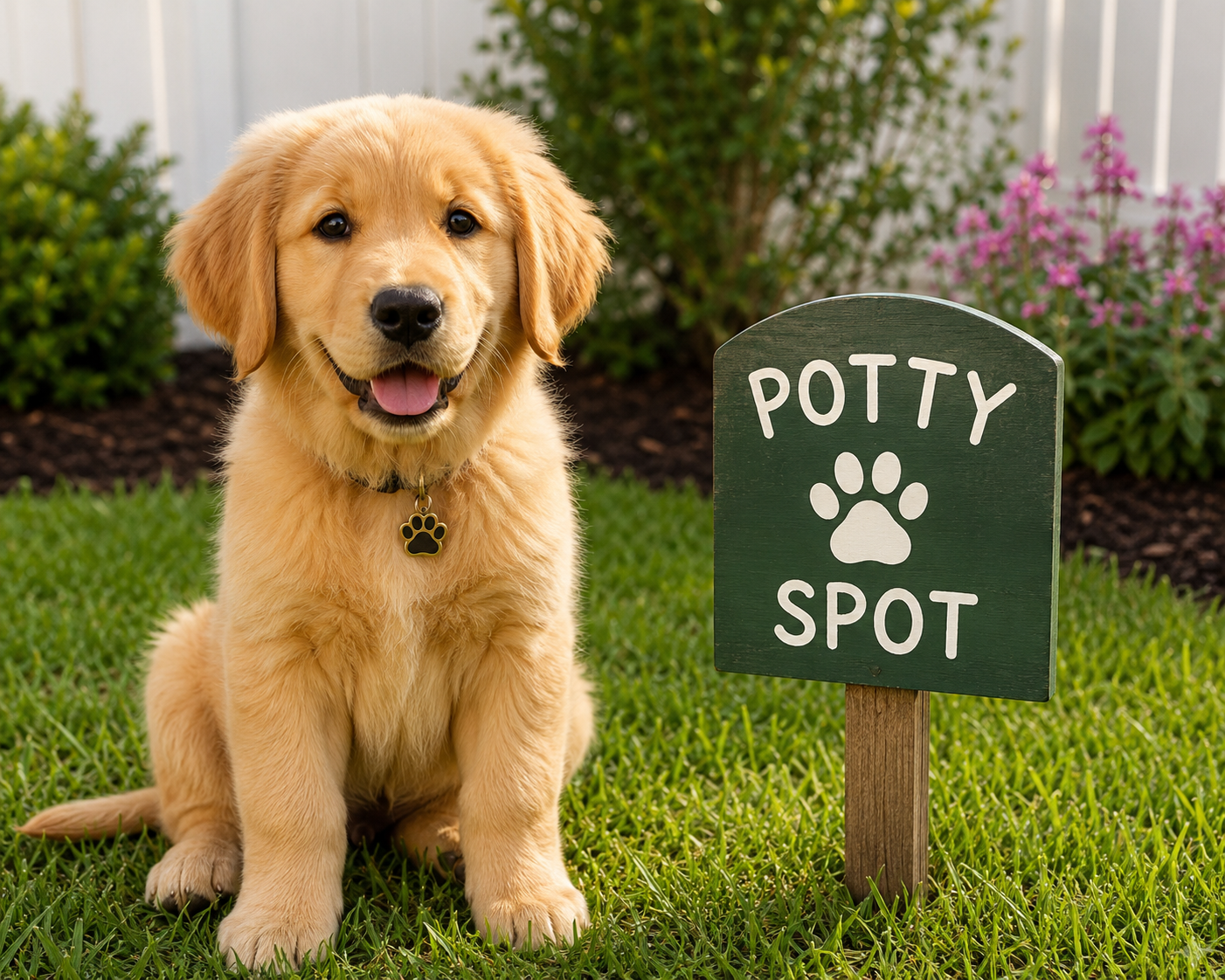
To potty train a puppy, take them outside to the same spot every 1–2 hours, first thing in the morning, after every meal, after naps, and after play. Reward them with praise or a treat within seconds of them going in the right place, use a crate or confined space to prevent accidents when you can’t supervise, and clean every accident with an enzymatic cleaner so odor doesn’t pull your puppy back to the same spot. Most puppies pick up the basics within 4 to 6 weeks, though full reliability can take 4 to 6 months.
Introduction
If you’ve just brought a new puppy home, learning how to potty train a puppy is probably the single most urgent skill on your to-do list — and for good reason. Puppy potty training, sometimes called house training or puppy toilet training, is the process of teaching your dog where and when it’s okay to relieve themselves, and it lays the foundation for every other lesson you’ll teach them. Get it right, and you’ll have a clean home, a confident puppy, and a much stronger bond with your new best friend. Get it wrong — or give up too early — and accidents can turn into stubborn habits that take months to unlearn.
The good news: potty training a puppy isn’t complicated once you understand the schedule, the tools, and the mindset behind it. This guide walks you through everything from crate training and pad training to what to do about accidents, how long house training a puppy actually takes, and the critical socialization window every new puppy owner should know about. Whether you’re raising a puppy in a house with a yard or house training a puppy in an apartment, you’ll find a complete, science-backed plan below.
Key Takeaways
- Puppies can typically “hold it” for about one hour per month of age, plus one extra hour.
- A consistent schedule matters more than any single training method.
- Crate training and pad training are tools, not shortcuts — they still require supervision and consistency.
- Most house training a puppy takes 4–6 months for full reliability, though basic habits often form within a few weeks.
- Never punish accidents. Redirect calmly and clean thoroughly with an enzymatic cleaner.
- The critical socialization period (roughly 3–14 weeks) overlaps with potty training, so handle both gently and positively at the same time.
What Is Puppy Potty Training?
Puppy potty training — also called house training a puppy or puppy toilet training — is the process of teaching a young dog to eliminate in an approved location, on cue, and on a predictable schedule. It’s built on three pillars: consistency, supervision, and positive reinforcement. Puppies don’t arrive knowing the difference between a living room rug and a patch of grass; they simply need to go when their bladder tells them to. Your job during potty training is to control the environment and the timing so your puppy is set up to succeed rather than to fail.
Unlike obedience commands, potty training isn’t something you can rush through in a single afternoon. It’s a routine you build together over weeks, gradually expanding your puppy’s freedom in the house as they prove they understand the rules.
When Do Puppies Potty Train? (Age & Timeline)
Most puppies are ready to begin structured potty training as soon as they come home, typically between 8 and 12 weeks of age. At this age, a puppy’s bladder and bowel control are still developing, so accidents are expected and normal — they are not a sign that training is failing.
A widely used guideline among trainers is the “age plus one” rule: a puppy can generally hold their bladder for about one hour for every month of age, plus one additional hour. So a 2-month-old puppy might manage roughly three hours, while a 4-month-old puppy might stretch to five. This is a helpful planning tool, but it should never replace watching your puppy’s actual behavior and body language.
By 12 to 16 weeks, most puppies show noticeably better bladder and bowel control. By 6 months, many are close to reliable, and by a year old, most dogs can comfortably hold it through a full night and a normal workday.
How Long Does It Take to Potty Train a Puppy?
This is one of the most searched questions from new owners, and the honest answer is: it depends, but plan for 4 to 6 months for full reliability, with many puppies showing strong basic habits within the first 4 to 6 weeks of consistent training.
Several factors affect how long house training a puppy takes:
- Age and breed size — smaller breeds often have smaller bladders and may take longer.
- Prior experience — a puppy who came from a breeder that used pads or newspaper may need to unlearn that habit first.
- Owner consistency — puppies trained on a strict, predictable schedule tend to progress faster than those on an inconsistent routine.
- Supervision level — the more accidents a puppy has indoors, the longer training tends to take, because each accident can reinforce the wrong location.
If someone promises you can potty train a puppy in a single week, treat that as an aspirational best-case scenario rather than a guarantee. Some puppies do learn the basics that fast; most need more patience.
Supplies You’ll Need Before You Start

- A properly sized crate (just big enough to stand, turn, and lie down in)
- An exercise pen or baby gates for confinement
- High-value treats for immediate rewards
- An enzymatic cleaner made for pet urine and waste
- A standard 4–6 foot leash (even for backyard trips)
- Puppy pads or a litter box/turf box, if you’re pad training
- A consistent verbal cue, such as “go potty” or “get busy”
Step-by-Step: How to Potty Train Your Puppy
- Pick one designated potty spot outside and take your puppy there on a leash every time, even in a fenced yard. The leash keeps them focused instead of exploring.
- Use a consistent verbal cue the moment they start to go, like “go potty.” Over time this cue alone will prompt elimination.
- Reward immediately — within 1–3 seconds of finishing — with praise or a treat. Timing is everything; rewarding too late teaches the wrong lesson.
- Follow a fixed schedule. Take your puppy out first thing in the morning, after every meal, after naps, after play sessions, and last thing at night.
- Supervise constantly indoors. If you can’t watch your puppy directly, use a crate or a small, puppy-proofed area.
- Gradually expand freedom. As your puppy goes several days without an indoor accident, allow supervised access to more of the house.
- Stay consistent even after progress. Many owners stop rewarding too early. Keep reinforcing successful potty trips until your puppy is reliably a year old.
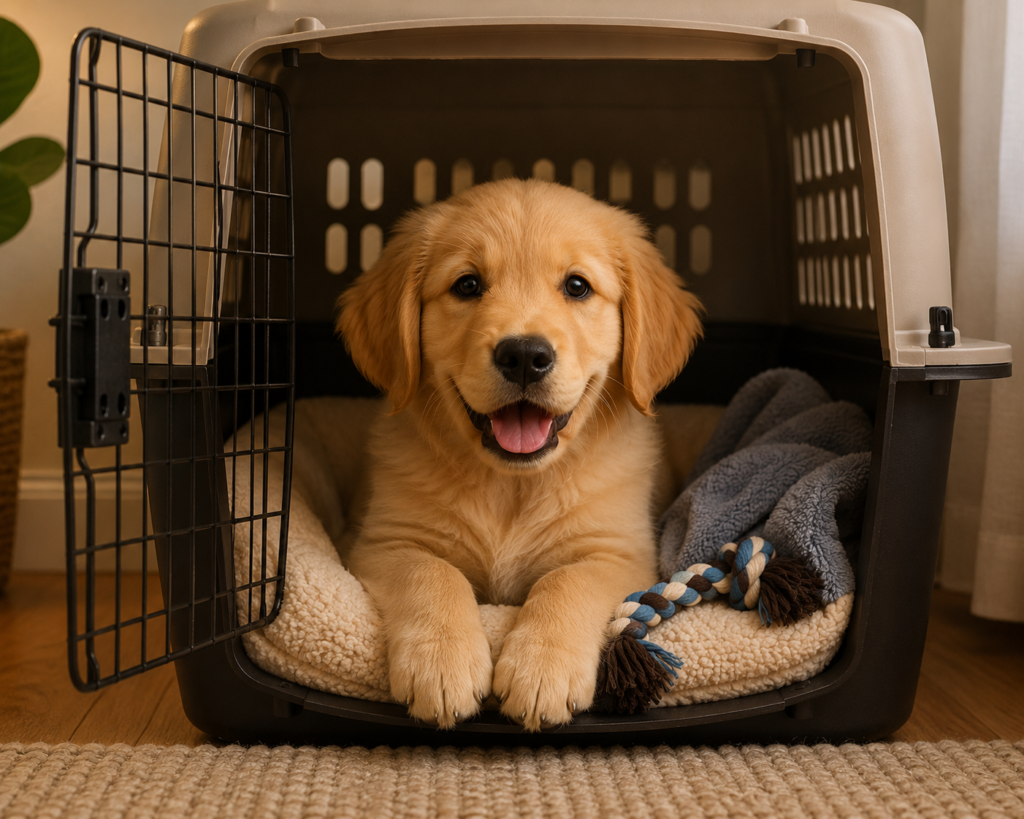
Crate Training a Puppy for Potty Success
Crate training a puppy is one of the most effective house training tools available, because dogs instinctively avoid soiling the space where they sleep. A properly introduced crate becomes a den — a safe, comfortable space, not a punishment.
How to use a crate for potty training:
- Size the crate so your puppy can stand, turn around, and lie down — but not so large they can potty in one corner and sleep in another.
- Make the crate inviting with a soft bed, safe chew toy, and positive associations (never send your puppy to the crate as punishment).
- Take your puppy directly to their potty spot the moment you let them out of the crate.
- Avoid leaving a young puppy crated longer than they can physically hold it — refer to the age-plus-one rule above.
- If your puppy has been soiling the crate, dial the process back: shorten crate time, rule out medical issues with your veterinarian, and rebuild positive associations from scratch.
How to Potty Train a Puppy on Pads
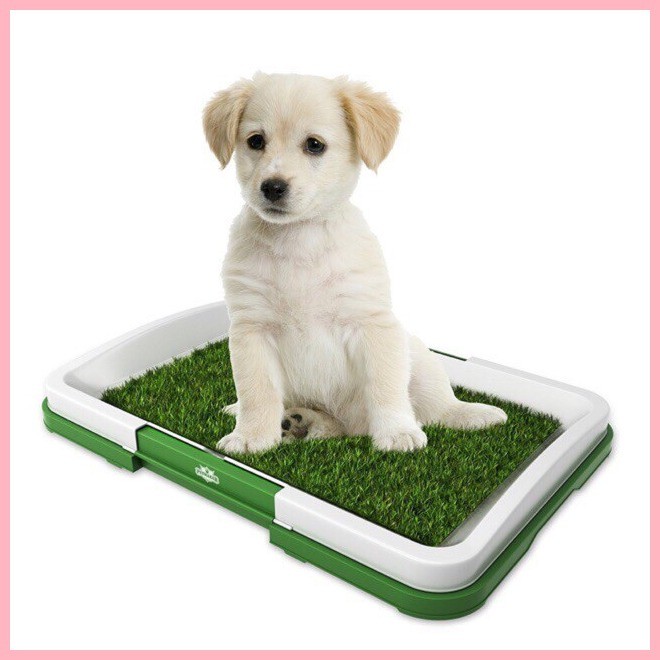
Puppy pad training can work well for owners in high-rise apartments, those with mobility limitations, or toy-breed owners in extreme climates — but it comes with tradeoffs. Because pad training and outdoor training are two different “systems,” some puppies end up confused about which surface is acceptable, which is why many trainers recommend outdoor training exclusively when possible.
Steps for potty training a puppy on pads:
- Choose one consistent, visible location for the pad — often near a door you’ll eventually use for outdoor trips.
- Place the pad in a confined area (playpen or small room) so it’s the only reasonable option nearby.
- Bring your puppy to the pad on the same schedule you’d use for outdoor breaks.
- Reward immediately when they use the pad correctly.
- If you plan to transition to outdoor-only elimination later, gradually move the pad closer to the exit door, then outside, over several weeks.
Keep in mind: indoor pad training can sometimes extend the overall timeline for full outdoor house training, since your puppy is learning two acceptable surfaces instead of one.
How to Potty Train a Puppy in an Apartment
Potty training a puppy in an apartment adds a few extra logistics but is entirely doable with the right plan.
- Plan your route in advance. Time how long it takes to get your puppy from your unit to an acceptable outdoor spot, and account for that lag in your schedule.
- Keep a leash and poop bags by the door so you can move quickly when you see potty signals.
- Consider a balcony turf box or pad system as a backup for middle-of-the-night emergencies, especially with small breeds.
- Use elevators and stairwells calmly — a puppy who becomes anxious in a hallway may be too distracted to focus on elimination once outside.
- Talk to your building or neighbors about a consistent outdoor relief area if your building has shared green space.
Puppy Training Schedule by Age
| Age | Potty Break Frequency | Notes |
|---|---|---|
| 8–10 weeks | Every 1–2 hours, plus after meals/naps/play | Expect frequent accidents; this is normal |
| 10–12 weeks | Every 2 hours | Bladder control beginning to improve |
| 3–4 months | Every 3 hours | Nighttime stretches lengthen |
| 4–6 months | Every 4 hours | Fewer accidents with consistent routine |
| 6 months–1 year | Every 4–6 hours | Most dogs approaching full reliability |
Recognizing the Signs Your Puppy Needs to Go
Learning to read your puppy’s body language is one of the most effective ways to prevent accidents. Common signals include:
- Sudden sniffing or circling
- Pacing or restlessness
- Whining or barking near the door
- Stopping play abruptly
- Scratching at the door or crate
Because puppies often show these signs only briefly before an accident happens, it helps to act at the first hint rather than waiting for a clearer signal.
How to Handle Puppy Accidents (Without Setbacks)
Puppy accidents are a normal, expected part of the process — not a sign that training has failed.
If you catch your puppy in the act: Calmly interrupt (a light clap works better than shouting), then quickly guide them to the correct spot and let them finish there, followed by praise.
If you find the accident after the fact: Simply clean it up. Puppies don’t connect punishment after the fact with the earlier accident, so scolding at this point only creates confusion or fear.
Cleaning matters more than most owners realize. Standard household cleaners can leave behind trace odors that draw your puppy back to the same spot. Always use an enzymatic cleaner designed specifically for pet urine and stool, and avoid ammonia-based products, which can actually mimic the smell of urine.
When accidents suddenly increase in a previously trained dog, it’s worth ruling out a medical cause such as a urinary tract infection with your veterinarian, since this is a common and treatable reason for a housetraining regression.
The Critical Socialization Period for Puppies
Potty training doesn’t happen in isolation — it overlaps directly with the critical socialization period for puppies, generally considered to fall between roughly 3 and 14 weeks of age. During this window, puppies are unusually open to new experiences, and how they’re handled has a lasting effect on their confidence and behavior as adults.
Because potty training often begins right in the middle of this window, it’s important to keep training positive and pressure-free. A puppy who is scolded harshly for accidents during this sensitive period may become anxious or fearful in ways that go beyond house training — affecting how they respond to new people, environments, and experiences later in life. Pairing gentle, reward-based potty training with calm, varied socialization experiences (new sounds, surfaces, people, and friendly vaccinated dogs) gives your puppy the best possible start.
Common Mistakes That Slow Down Potty Training
- Taking puppies out too infrequently, or waiting for signs instead of following a schedule.
- Punishing accidents, which creates fear rather than understanding.
- Declaring victory too soon and stopping rewards before habits are fully set.
- Inconsistent supervision, giving too much house freedom before it’s earned.
- Skipping the leash outdoors, which lets puppies wander and get distracted instead of focusing on elimination.
- Using the wrong cleaner, leaving residual odor that pulls puppies back to old accident spots.
- Mixing signals between pad training and outdoor training without a clear transition plan.
Expert Tips and Best Practices
- Keep a simple written log of potty breaks and accidents for the first two weeks — patterns emerge faster than you’d expect, and they help you fine-tune timing.
- Feed on a fixed schedule; consistent meals produce more predictable elimination times.
- Reward the instant your puppy finishes, not after you’re both back inside.
- Treat the fenced backyard like any other room in the house during training — supervision still applies.
- If you work full days, arrange a midday dog walker or trusted helper rather than stretching a young puppy’s bladder past its limit.
Real-Life Example: A Sample First Week
Many new owners find it easier to visualize training with a real routine. Here’s a simplified first-week schedule for an 9-week-old puppy:
- 6:30 a.m. – Straight from the crate to the potty spot, reward, then breakfast.
- 7:15 a.m. – Potty break after breakfast.
- 9:00 a.m. – Potty break after a play session, then supervised free time.
- 11:00 a.m. – Potty break, followed by a nap in the crate.
- 1:00 p.m. – Potty break immediately upon waking.
- 3:00 p.m. – Potty break, lunch, then another break after eating.
- 5:30 p.m. – Potty break after an afternoon play session, then dinner and another break.
- 8:00 p.m. – Potty break before settling in for the evening.
- 10:30 p.m. – Final potty break before crating for the night.
Expect a few accidents even with this schedule in the first week — that’s normal, not a failure of the plan.
Safety Considerations
- Never use a crate as punishment; this undermines its value as a safe den.
- Avoid leaving a young puppy in a crate longer than their bladder can safely hold.
- Skip ammonia-based cleaners, since the scent can resemble urine and encourage repeat accidents.
- If your puppy shows straining, blood in urine, or unusual frequency, contact your veterinarian promptly, since these can signal a urinary tract infection or other medical issue rather than a training problem.
- Hold off on outdoor training in public dog areas until your veterinarian confirms your puppy’s vaccination schedule allows it.
FAQs
How long does it take to potty train a puppy?
Most puppies show solid basic habits within 4 to 6 weeks of consistent training, though full reliability often takes 4 to 6 months, and can extend closer to a year for some small breeds.
How long does a puppy take to potty train if I work full-time?
It typically takes longer, since consistent daytime breaks are harder to provide. Arranging a midday dog walker or pet sitter usually speeds things up considerably.
When do puppies potty train — is there a set age?
Structured potty training usually starts at 8–12 weeks, with meaningful bladder control improvements appearing by 12–16 weeks and continuing to mature through the first year.
Should I potty train a puppy on pads or go straight outside?
Pads can help in apartments or with toy breeds, but going straight outside is usually faster and avoids the extra step of transitioning off pads later.
Is crate training necessary for potty training?
It isn’t strictly required, but it is one of the most effective management tools available, since puppies naturally avoid soiling their sleeping area.
What should I do if my puppy has an accident in the house?
Clean it thoroughly with an enzymatic cleaner and, if you catch them mid-accident, calmly redirect them outside. Never punish after the fact.
Why does my house-trained puppy suddenly have accidents again?
A sudden increase in accidents after previous success can indicate a medical issue, such as a urinary tract infection, so a veterinary check is a reasonable first step.
How often should I take my puppy out to potty?
As a general rule, every 1–2 hours for very young puppies, plus immediately after waking, eating, and playing, gradually extending the interval as your puppy matures.
Conclusion
Learning how to potty train a puppy comes down to a simple formula: a predictable schedule, constant supervision, immediate rewards, and patience with the inevitable accidents along the way. Whether you’re crate training, pad training, or house training a puppy in a busy apartment, the same core principles apply — and most puppies become reliably house trained within a few months when owners stay consistent. Start your schedule today, keep an enzymatic cleaner on hand for the occasional slip-up, and remember that every successful trip outside is one more building block toward a well-mannered, confident adult dog.
Looking to build on this foundation? Check out our guides on crate training an adult dog, basic dog commands every dog should know, and expert puppy training advice from Kathy Santos to keep your puppy’s education on track.