


Quick Answer
Yes, you can successfully train a puppy at home with patience, consistency, and positive reinforcement. Start training your puppy as early as 8 weeks old by teaching basic commands like sit, stay, come, and leave it. Reward every good behavior with treats, praise, or toys, and keep training sessions short—around 5 to 10 minutes. By following a daily routine and staying consistent, your puppy will learn quickly and develop into a happy, well-behaved companion.
Introduction
Bringing home a new puppy is an exciting milestone, but it also comes with important responsibilities. One of the first and most valuable things you can do is start training your puppy at home. Many first-time dog owners believe they need a professional trainer, but that’s not always the case. With the right approach, patience, and daily practice, you can teach your puppy essential life skills from the comfort of your own home.
Learning how to train a puppy at home is about much more than teaching commands. It’s about building trust, creating healthy routines, and helping your puppy understand what is expected. Puppies are eager to learn during their first few months of life, making this the perfect time to establish good habits that will last a lifetime.
In this guide, you’ll discover practical, beginner-friendly training methods that are easy to follow. From preparing your home and choosing the right rewards to teaching your puppy basic obedience, this article will help you build a strong foundation for a happy and confident dog.
Quick Training Checklist
| Training Task | Recommended Age | Difficulty |
| Name Recognition | 8 Weeks | ⭐ |
| Sit | 8 Weeks | ⭐ |
| Come | 8 Weeks | ⭐ |
| Stay | 9 Weeks | ⭐⭐ |
| Potty Training | 8 Weeks | ⭐⭐⭐ |
| Crate Training | 8 Weeks | ⭐⭐ |
| Leash Training | 10 Weeks | ⭐⭐ |
| Socialization | 8–16 Weeks | ⭐⭐⭐ |
Key Takeaways
- Start training as early as 8 weeks of age.
- Keep sessions short, fun, and consistent.
- Reward good behavior immediately.
- Avoid punishment and focus on positive reinforcement.
- Train every day to build lasting habits.
- Socialize your puppy with new people, places, and experiences.
- Be patient—every puppy learns at its own pace.
Table of Contents
- Why Early Puppy Training Matters
- When Should You Start Training a Puppy?
- Preparing Your Home for Success
- Essential Puppy Training Supplies
- The Golden Rule of Puppy Training
- Teaching Your Puppy Their Name
- Basic Commands Every Puppy Should Learn
- Potty Training
- Crate Training
- Leash Training
- Socialization Tips
- Common Mistakes
- FAQs
- Conclusion
Why Early Puppy Training Matters
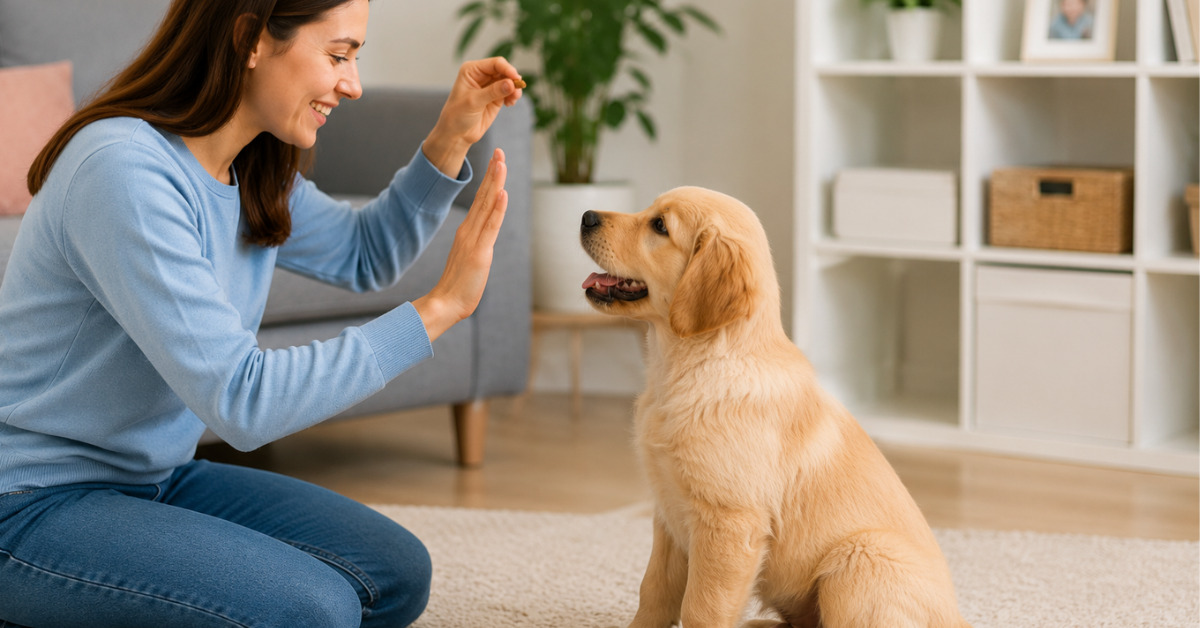
The first few months of your puppy’s life are the most important for learning. During this stage, puppies absorb new experiences quickly and begin developing habits that can last a lifetime. Starting training early helps prevent unwanted behaviors while building confidence and trust.
Early training also creates a stronger bond between you and your puppy. Every positive training session teaches your puppy to look to you for guidance, making future learning much easier.
Some of the biggest benefits of early training include:
- Builds confidence and trust
- Prevents unwanted behaviors
- Makes house training easier
- Encourages better social skills
- Strengthens communication between you and your puppy
When Should You Start Training a Puppy?
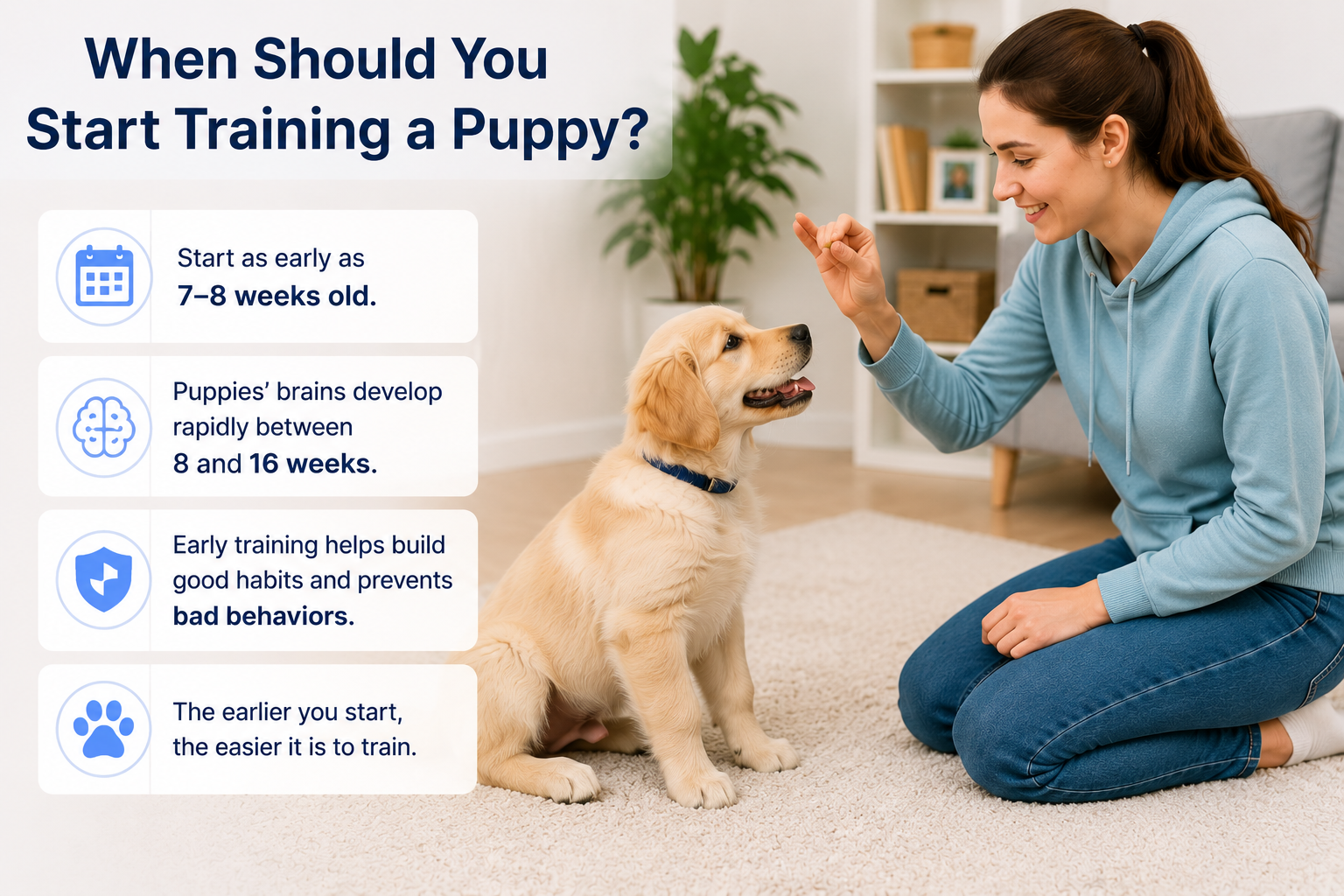
Most veterinarians and professional dog trainers recommend beginning training at 8 weeks of age. At this stage, puppies are naturally curious and eager to learn. Even though their attention span is short, they can quickly understand simple commands and routines.
Keep each training session between 5 and 10 minutes. Short, enjoyable lessons are much more effective than long sessions that leave your puppy tired or frustrated.
Remember, consistency is more important than perfection. Daily practice will help your puppy learn faster and build good habits that last for years.
Preparing Your Home for Puppy Training
Before you begin training, create a safe and distraction-free environment where your puppy can focus. Choose a quiet area of your home with enough space for short training sessions. Remove anything your puppy might chew, swallow, or trip over.
A consistent daily routine is just as important as the training itself. Feed your puppy, take them outside, play, and train at roughly the same times each day. Puppies learn faster when they know what to expect.
Puppy Training Essentials
Keep these items ready before you start:
- Healthy training treats
- A comfortable collar or harness
- A lightweight leash
- Food and water bowls
- Interactive chew toys
- A crate
- Puppy training pads (if needed)
- Clicker (optional)
Having everything prepared helps every training session run smoothly.
The Golden Rule of Puppy Training
The most effective way to train a puppy is through positive reinforcement. This means rewarding your puppy immediately after they perform the desired behavior.
Rewards can include:
- Small training treats
- Verbal praise such as “Good boy!” or “Good girl!”
- Gentle petting
- A favorite toy
- Short play sessions
Avoid yelling or punishing your puppy. Harsh corrections often create fear and confusion, making training more difficult. Instead, reward the behaviors you want to see more often.
Teach Your Puppy Their Name First
Before teaching commands, your puppy should learn to recognize their name.
Say your puppy’s name in a happy, excited voice. The moment they look at you, reward them with praise and a treat.
Practice this exercise several times a day in different rooms of your home. Once your puppy responds consistently, you can begin teaching basic commands.
Basic Commands Every Puppy Should Learn
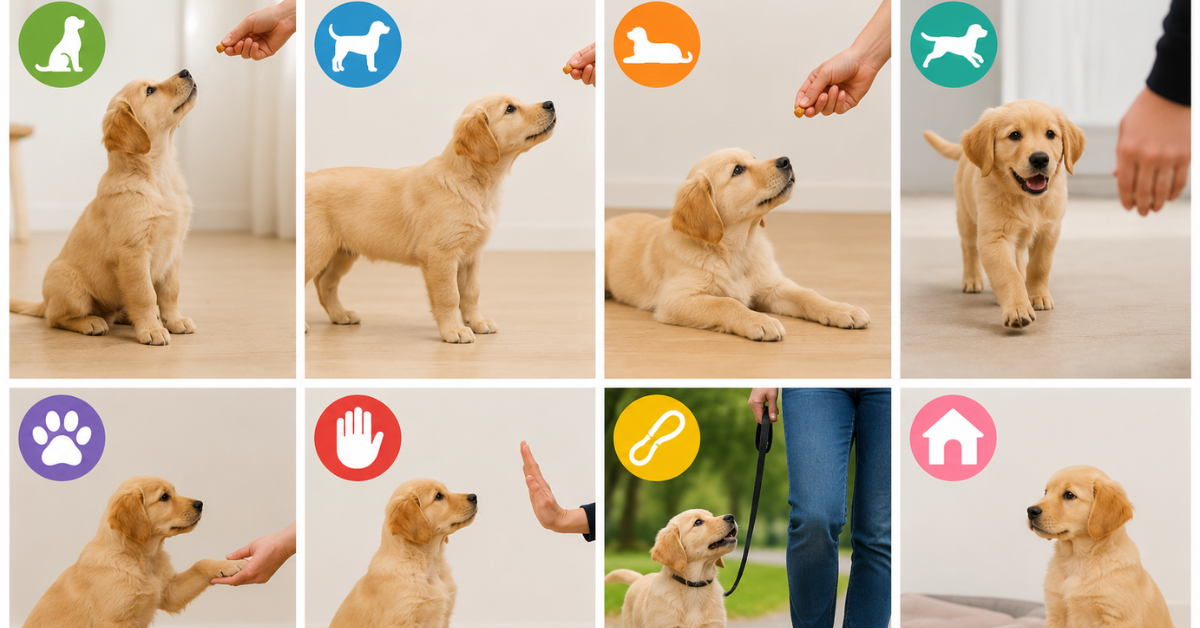
Teaching basic obedience builds a strong foundation for future training.
Sit
Hold a treat close to your puppy’s nose and slowly move it upward and slightly backward. As your puppy naturally sits, clearly say “Sit” and immediately reward them.
Repeat this command several times each day until your puppy responds without needing to see the treat.
Stay
Hold your hand in front of them like a stop sign and say “Stay.”
Take one small step backward. If your puppy remains in place for a few seconds, reward them immediately.
Gradually increase both the distance and the amount of time.
Come
The Come command is one of the most important commands for your puppy’s safety.
Crouch down, open your arms, and cheerfully say “Come!”
When your puppy runs toward you, reward them with treats, praise, and affection.
Never punish your puppy after they come to you. They should always associate this command with positive experiences.
Leave It
Place a treat on the floor and cover it with your hand.
When your puppy stops trying to reach it, immediately reward them with a different treat from your other hand.
This command helps prevent your puppy from picking up dangerous objects during walks.
Potty Training Your Puppy
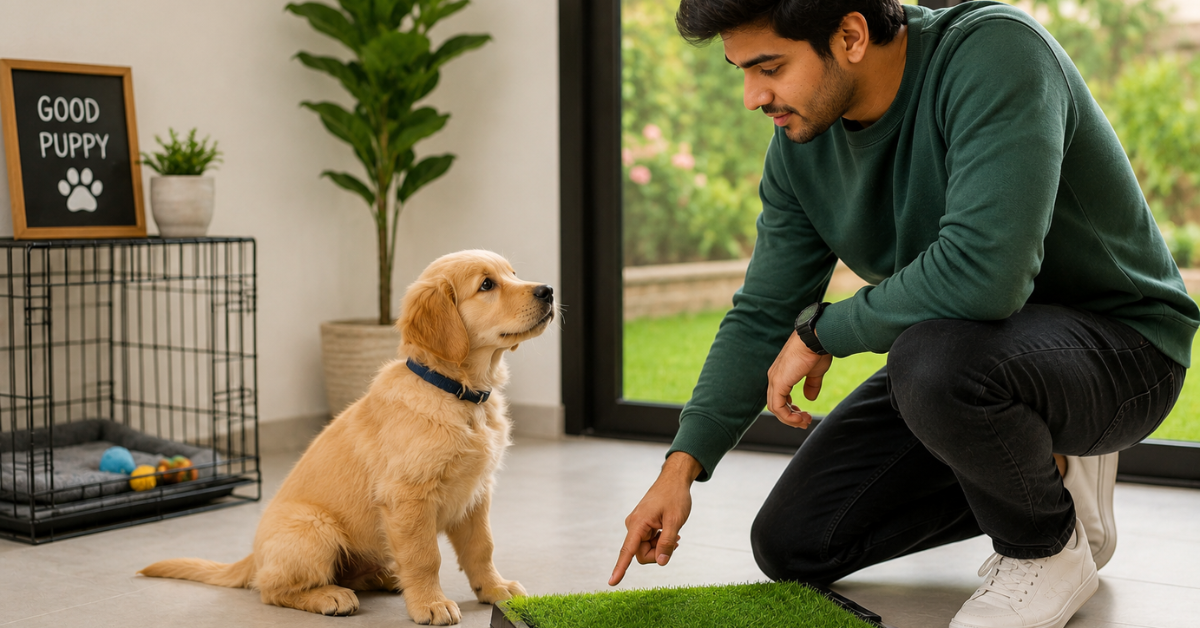
House training requires patience and consistency.
Take your puppy outside:
- First thing in the morning
- After every meal
- After naps
- After playtime
- Before bedtime
Choose one potty area and use the same cue, such as “Go potty.”
As soon as your puppy finishes, reward them with praise and a treat.
If an accident happens indoors, clean it thoroughly without scolding your puppy. Accidents are a normal part of learning.
Crate Training Made Easy
A crate provides your puppy with a safe and comfortable place to relax. It can also speed up house training.
Introduce the crate slowly by placing soft bedding, toys, and treats inside. Allow your puppy to enter willingly without forcing them.
Keep crate sessions short at first and gradually increase the time as your puppy becomes comfortable.
Never use the crate as punishment. Your puppy should always see it as a safe place.
Leash Training at Home
Start leash training indoors where there are fewer distractions.
Attach a lightweight leash and allow your puppy to walk around while supervised. Encourage them to follow you using treats and praise.
If your puppy pulls on the leash, stop walking immediately. Continue only when the leash becomes loose. This teaches your puppy that pulling will not help them move forward.
With daily practice, your puppy will learn to walk calmly beside you.
Stop Puppy Biting and Chewing
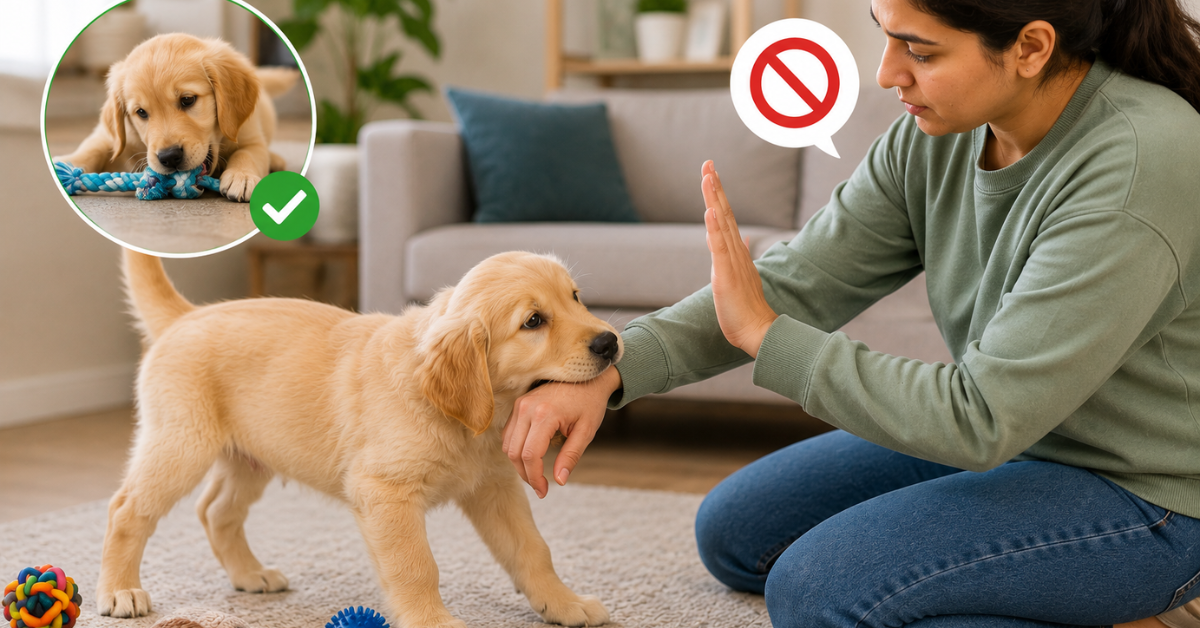
Puppies naturally explore the world with their mouths, so biting and chewing are completely normal. However, it’s important to teach them what they can and cannot chew before these habits become permanent.
If your puppy starts biting your hands or clothes during play, calmly stop playing and redirect their attention to a chew toy. When they choose the toy instead of your hand, reward them with praise or a treat. This teaches your puppy that chewing toys is acceptable while biting people is not.
Avoid rough play that encourages chasing or biting. Consistency is the key to reducing unwanted chewing behavior.
Tips to Reduce Puppy Biting
- Provide plenty of safe chew toys.
- Redirect biting to a toy immediately.
- Reward calm behavior.
- Keep valuable items out of reach.
- Make sure your puppy gets enough exercise and mental stimulation.
Socialize Your Puppy Early
Socialization is one of the most important parts of puppy training. A well-socialized puppy grows into a confident, friendly, and well-behaved adult dog.
Introduce your puppy to different people, friendly dogs, sounds, surfaces, and environments in a positive way. Every new experience should be calm and enjoyable.
Good socialization helps prevent fear, anxiety, and aggression later in life.
Socialization Ideas
- Meet family members and friends.
- Walk in different neighborhoods.
- Visit dog-friendly parks after vaccinations.
- Introduce household noises like vacuum cleaners and doorbells.
- Let your puppy experience different surfaces such as grass, wood, tile, and carpet.
Always supervise new experiences and never force your puppy into situations that make them uncomfortable.
Common Puppy Training Mistakes
Even experienced dog owners sometimes make mistakes during training. Avoiding these common errors will help your puppy learn faster.
Being Inconsistent
If different family members use different commands or rules, your puppy will become confused. Everyone should use the same commands and expectations.
Using Punishment
Yelling or punishing your puppy creates fear instead of learning. Focus on rewarding good behavior rather than correcting mistakes harshly.
Expecting Results Too Quickly
Training takes time. Every puppy learns at a different pace, so be patient and celebrate small improvements.
4. Skipping Daily Practice
Training should happen every day. Even five minutes of practice is better than no practice at all.
5. Ignoring Good Behavior
Many owners only notice mistakes. Remember to reward your puppy whenever they behave well so they understand what you expect.
Expert Puppy Training Tips
Professional dog trainers recommend building training into your puppy’s daily routine.
- Keep sessions between 5 and 10 minutes.
- End every session on a positive note.
- Always carry small training treats.
- Practice commands in different locations.
- Use a cheerful voice and positive body language.
- Gradually increase distractions as your puppy improves.
- Be patient and consistent every day.
Remember, training is not about perfection—it’s about building trust and communication.
Frequently Asked Questions
How long does it take to train a puppy at home?
Most puppies learn basic commands within a few weeks of daily practice. Complete training usually takes several months, depending on the breed, age, and consistency.
What is the best age to start puppy training?
The ideal age is around 8 weeks old. Puppies can begin learning simple commands and routines as soon as they arrive home.
How long should puppy training sessions last?
Keep each session between 5 and 10 minutes. Short, frequent sessions are more effective than long lessons.
Should I punish my puppy for accidents?
No. Punishment can create fear and slow the learning process. Instead, clean accidents thoroughly and reward your puppy when they are eliminated in the correct place.
Can older puppies still be trained?
Absolutely. While younger puppies often learn faster, dogs of any age can learn new commands with patience and consistency.
What treats are best for puppy training?
Use small, soft, low-calorie treats that your puppy enjoys. The reward should be easy to eat so training can continue without long interruptions.
Why does my puppy keep biting me?
Biting is normal during teething and play. Redirect the behavior to appropriate chew toys and reward your puppy for chewing the correct items.
How often should I train my puppy?
Aim for two to four short training sessions every day. Daily repetition helps your puppy remember commands and develop good habits.
Conclusion
Training your puppy at home is one of the most rewarding experiences for any dog owner. By starting early, staying patient, and using positive reinforcement, you can teach your puppy essential life skills that will last a lifetime.
Remember that every puppy learns at a different pace. Focus on consistency rather than perfection, celebrate small successes, and make every training session enjoyable. With daily practice, clear communication, and plenty of encouragement, your puppy will grow into a confident, happy, and well-mannered companion.
Building a strong relationship through training not only improves your puppy’s behavior but also creates a lifelong bond based on trust and respect. Stay committed, enjoy the journey, and you’ll be rewarded with a loyal friend for years to come.
Meta Description
Learn how to train a puppy at home with simple, step-by-step methods. Discover potty training, basic commands, crate training, leash training, and expert tips to raise a happy, well-behaved puppy.