


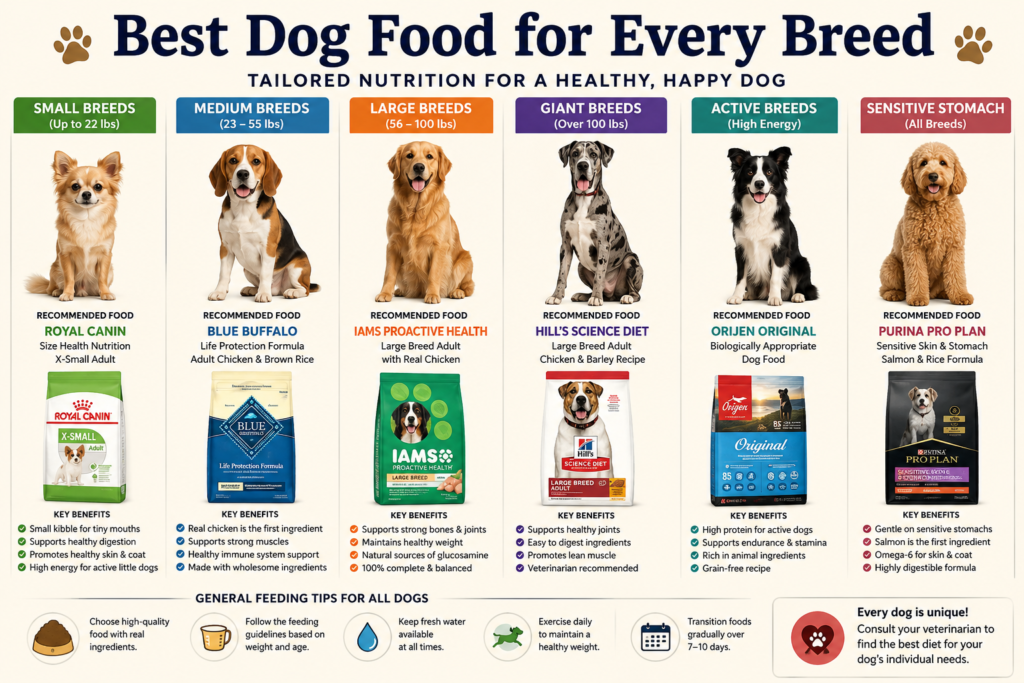
Quick Answer
The best dog food for every breed depends on your dog’s size, age, activity level, and nutritional needs. Small breeds usually benefit from calorie-rich kibble made for tiny mouths, while large breeds need balanced formulas that support healthy joints and controlled growth. Choosing high-quality dog food for different breeds with real meat, healthy fats, and essential vitamins helps keep your dog active, healthy, and happy.
Introduction
Walking into a pet store or browsing online can feel overwhelming when you see hundreds of dog food options. Every brand claims to be the best, yet not every formula is suitable for every dog. The truth is that a Chihuahua, a Labrador Retriever, and a German Shepherd all have different nutritional requirements, which means one food cannot perfectly meet every dog’s needs.
Choosing the best dog food is about much more than picking a popular brand. Breed, body size, age, energy level, and overall health all play an important role in determining what your dog should eat. A balanced diet helps maintain a healthy weight, supports strong bones and muscles, improves digestion, and keeps your dog’s coat shiny throughout every stage of life.
In this guide, you’ll learn how to choose the best dog food for every breed, understand which ingredients truly matter, and discover practical feeding tips that can help your furry companion enjoy a longer and healthier life.
Quick Comparison Table
| Dog Category | Recommended Food Type | Main Benefit |
| Small Breeds | Small-breed dry food | Higher energy and easier chewing |
| Medium Breeds | Complete balanced formula | Supports daily activity and muscle health |
| Large Breeds | Large-breed formula | Promotes healthy joints and controlled growth |
| Puppies | Puppy-specific food | Supports healthy growth and brain development |
| Senior Dogs | Senior dog formula | Helps maintain joint health and healthy weight |
Key Takeaways
- The best dog food for every breed depends on breed size, age, and lifestyle.
- High-quality protein should be the first ingredient.
- Healthy fats support skin, coat, and brain function.
- Avoid foods filled with unnecessary fillers and artificial additives.
- Choosing the right healthy dog food can improve your dog’s long-term health and quality of life.
Why Breed Matters When Choosing Dog Food
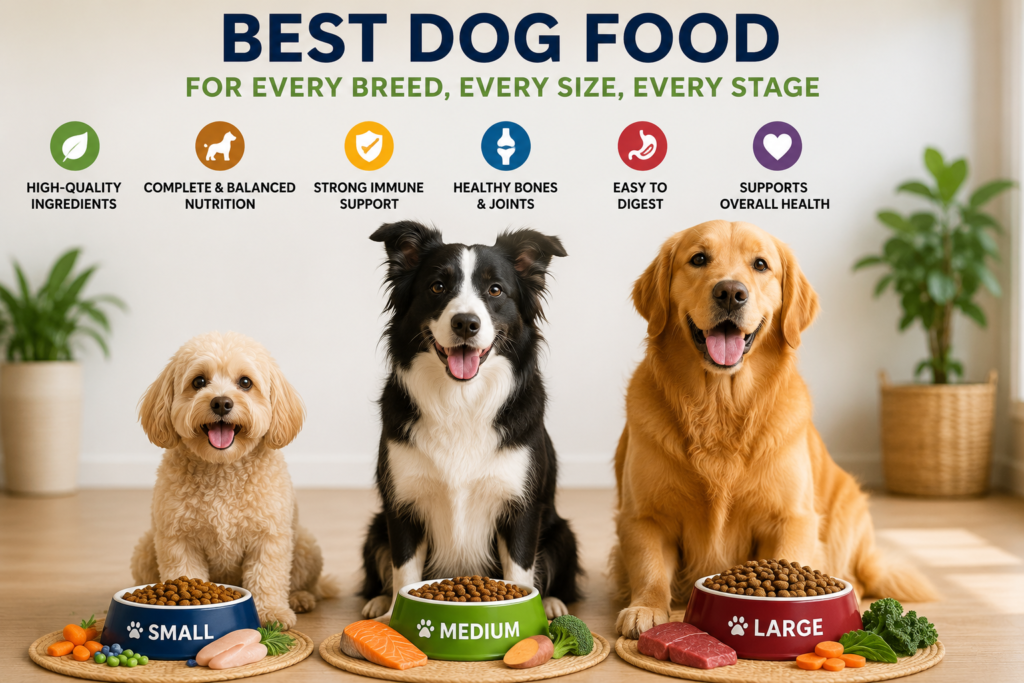
Not all dogs have the same nutritional needs. A small breed, such as a Yorkshire Terrier, burns energy much faster than a large breed like a Great Dane. Likewise, an active Border Collie requires a different balance of nutrients than a less active companion dog. That’s why choosing the best dog food for every breed starts with understanding your dog’s unique needs rather than buying the same food for every pet.
Breed size affects more than just portion sizes. It also influences calorie requirements, protein intake, joint support, and even the shape of the kibble. For example, small dogs often benefit from bite-sized food that’s easy to chew, while large breeds need specially formulated diets that support healthy bones and joints. Feeding the wrong formula over time may lead to weight gain, poor digestion, or nutritional deficiencies.
Another important factor is your dog’s life stage. Puppies need extra protein, healthy fats, and essential minerals to support rapid growth. Adult dogs require balanced nutrition to maintain muscle and energy, while senior dogs usually benefit from formulas with fewer calories and added joint-supporting ingredients. Selecting the right healthy dog food for your dog’s age helps them stay active and comfortable throughout their life.
Best Dog Food for Small Breeds
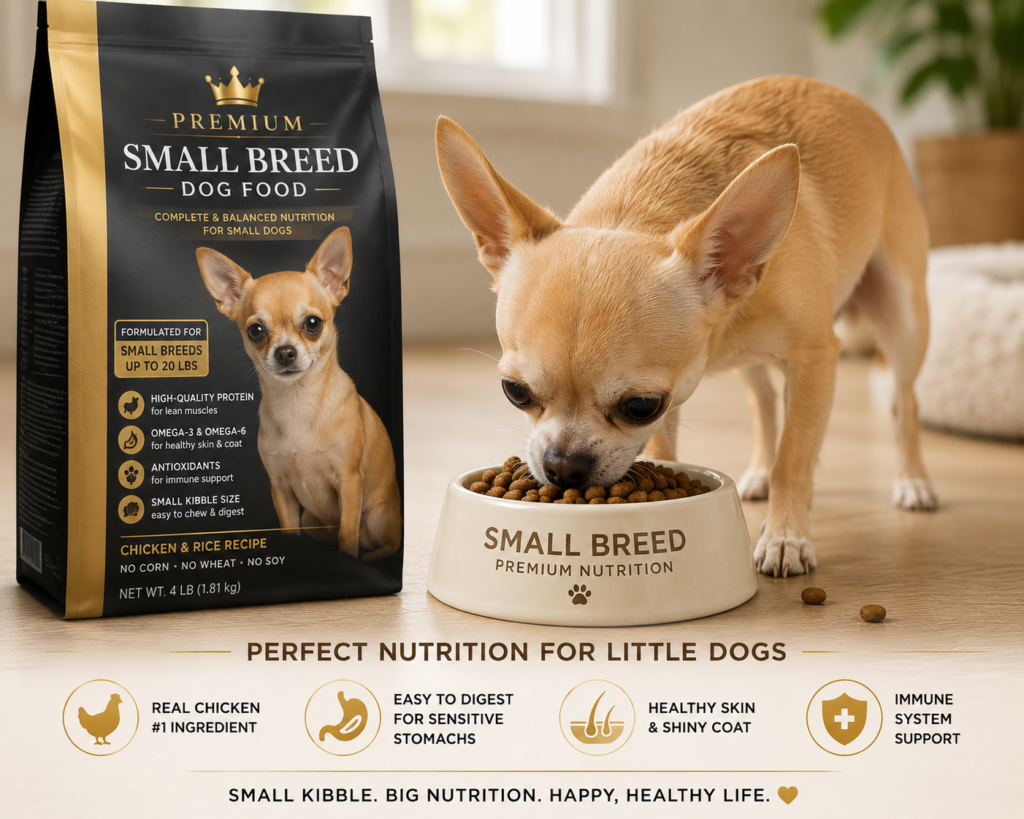
Small dogs may be tiny, but they have fast metabolisms and high energy levels. Because they burn calories quickly, they need nutrient-dense meals that provide enough protein, healthy fats, and vitamins without overfeeding. The best dog food for small breeds should also include smaller kibble pieces that are easier to chew and digest.
What to Look For
- Real meat as the first ingredient
- Healthy fats such as fish oil or chicken fat
- Small-sized kibble for easier chewing
- Added vitamins and minerals for immune support
- No unnecessary artificial colors or preservatives
Breeds like Chihuahuas, Pomeranians, Shih Tzus, and Yorkshire Terriers often do well on premium dog food for different breeds that are specially designed for smaller mouths and higher energy needs. Feeding measured portions instead of free-feeding also helps prevent unnecessary weight gain.
Learn more about choosing the right dog food
Best Dog Food for Medium Breeds
Medium-sized dogs are often active, playful, and full of energy. Breeds such as Beagles, Border Collies, Australian Shepherds, and Cocker Spaniels need balanced nutrition to support their muscles, digestion, and overall health. The best dog food for every breed should provide the right mix of protein, healthy fats, carbohydrates, vitamins, and minerals to match their daily activity.
A high-quality diet helps maintain a healthy weight while supporting strong muscles and a shiny coat. Since many medium breeds enjoy regular exercise, they benefit from food that provides steady energy without excessive calories.
What to Look For
- High-quality animal protein as the first ingredient
- Whole grains or healthy carbohydrates for lasting energy
- Omega-3 and Omega-6 fatty acids for healthy skin and coat
- Natural antioxidants to support the immune system
- No unnecessary fillers or artificial preservatives
Choose healthy dog food made with wholesome ingredients rather than products packed with artificial flavors or low-quality fillers. Reading the ingredient label is one of the easiest ways to make a better choice for your dog.
Best Dog Food for Large Breeds
Large breeds have different nutritional needs because they grow more slowly and place extra stress on their bones and joints. Dogs such as Labrador Retrievers, German Shepherds, Golden Retrievers, and Great Danes need carefully balanced meals that support healthy growth without encouraging excessive weight gain.
The best dog food for large breeds should contain quality protein, controlled calorie levels, and nutrients like glucosamine and chondroitin to help maintain joint health. These ingredients can support mobility and keep larger dogs active as they age.
Read the complete pet nutrition guide
What to Look For
- High-quality protein for lean muscle maintenance
- Glucosamine and chondroitin for joint support
- Controlled calcium and phosphorus levels
- Moderate calorie content to help maintain a healthy weight
- Easily digestible ingredients for better nutrient absorption
Choosing the right dog food for different breeds can make a noticeable difference in your dog’s energy, mobility, and long-term health, especially for larger dogs that naturally place more strain on their joints.
Frequently Asked Questions
What is the best dog food for every breed?
The best dog food for every breed depends on your dog’s size, age, activity level, and overall health. A high-quality diet with real meat, healthy fats, and essential nutrients is usually the best choice.
Should puppies and adult dogs eat the same food?
No. Puppies need food specially formulated to support healthy growth and brain development, while adult dogs require balanced nutrition to maintain their weight, muscles, and energy levels.
Is grain-free dog food better?
Not always. Unless your veterinarian recommends a grain-free diet for a specific medical reason, many dogs do well on foods that include wholesome grains such as brown rice or oats.
How often should I feed my dog?
Most adult dogs do well with two meals a day. Puppies usually need more frequent meals because they are growing quickly and have higher energy needs.
What ingredients should I avoid in dog food?
Choose foods with high-quality ingredients and avoid products that contain excessive artificial colors, preservatives, or unnecessary fillers. Reading the ingredient label can help you make a better decision.
Conclusion
Choosing the best dog food for every breed doesn’t have to be complicated. Once you understand your dog’s breed, size, age, and activity level, selecting the right food becomes much easier. A nutritious diet made with quality ingredients can support healthy growth, improve digestion, strengthen the immune system, and help your dog stay active for years to come.
Instead of focusing only on popular brands, pay attention to the ingredient list and your dog’s individual needs. With the right best dog food, proper portion sizes, fresh water, and regular veterinary care, you can give your furry companion the healthy and happy life they deserve.