
How to Train a Service Dog: A Real Step-by-Step Guide (2026)
Ask most people what a service dog does and you’ll get “helps blind people” — which isn’t wrong, exactly, just incomplete. Some are trained to catch a seizure minutes before it happens. Others learn to nudge a diabetic owner awake when their blood sugar crashes overnight, or pick up keys that dropped out of reach, or plant their body against someone’s leg so they don’t lose their footing. None of that comes from teaching a dog to sit and stay nicely.
It takes real time to build — I’ve seen estimates ranging from six months for a dog with strong natural instincts to over two years for more complex medical alert work. A lot depends on the individual dog, honestly. And before any of that training starts, it helps to know where the ADA actually draws the line on what qualifies as a service dog, because that shapes almost every decision that comes after.
Our Aim
Last month, a client stopped mid-session and asked me something I hear more often than I’d like: “Isn’t this basically the same as an emotional support dog?” I paused before answering, because that question trips up more people than you’d think. And that mix-up — lumping service dogs in with emotional support animals or therapy dogs — is exactly where most people get stuck before they’ve even started.
This article is for anyone standing at that starting line: dog owners trying to train their own service dog, handlers who inherited a dog mid-process, or trainers who want to do this professionally but aren’t sure what “professionally” even requires. We’ll go through what task training actually looks like, how public access work gets built up over time, what socialization really demands (it’s more than it sounds like), and where laws like the ADA in the US or the Equality Act in the UK actually apply — and where they don’t.
By the end, you should have enough to either start training your own dog with a real plan, or walk into a conversation with a professional trainer knowing what questions to ask.
How to Train a Service Dog: A Real Step-by-Step Guide (2026)
Turning a dog into a service dog isn’t really about teaching commands — it’s about building a working partner. The dog has to perform specific tasks tied to someone’s disability, and it has to do that reliably in the real world, not just on a quiet training field. Most teams take somewhere between 18 months and 3 years to get there, moving through eight stages that start with a socialized puppy and end with a dog you’d trust in an airport terminal, a hospital corridor, or a packed train platform without a second thought.
Where owner-trainers usually go wrong isn’t the dog’s ability — it’s the order things happen in. Skip ahead to public access work before the foundation is locked in, and cracks show up later, always at the worst possible moment.
Service Dog vs. Emotional Support Animal vs. Therapy Dog
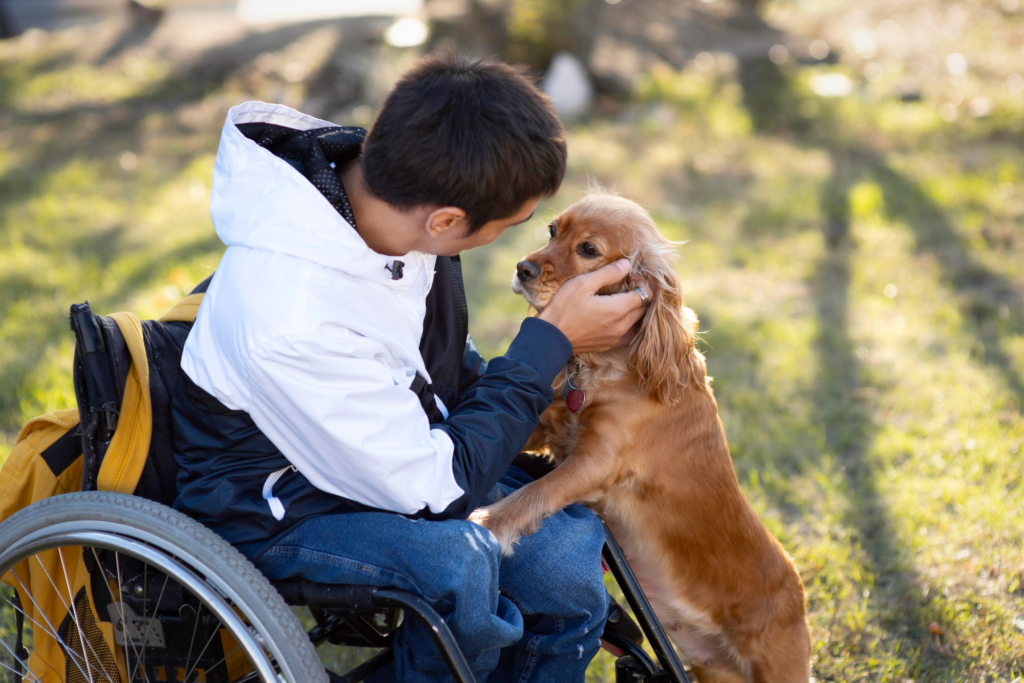
These three get lumped together constantly, and honestly, it’s not entirely people’s fault — the terminology gets used loosely all over the internet. Here’s the actual distinction:
A service dog is legally protected under the ADA in the US and the Equality Act 2010 in the UK, and it needs extensive task and public access training to earn that status. An emotional support animal has some housing protections and nothing else — no public access rights, no training requirement. A therapy dog isn’t legally protected at all; it’s a volunteer role that only applies wherever it’s specifically invited, like a hospital visit program.
The legal line comes down to one thing: a service dog has to perform a task connected to a disability. Comfort alone — even genuine, meaningful comfort — doesn’t meet that bar under the law.
What the Law Actually Says (US and UK)
A lot of guides only cover US law, which doesn’t help much if you’re reading this from Manchester or Glasgow. So here’s both, straight from source.
In the US, the ADA doesn’t require any professional program. You’re legally allowed to train your own dog, and the bar is lower than most people expect: the dog needs to perform a task tied to the disability, stay under control on leash or voice command, avoid disruptive behavior, and not toilet inappropriately in public — and the handler needs a qualifying disability. You can read the government’s own wording directly on the Department of Justice’s ADA Service Animal page.
In the UK, it works a bit differently. Assistance dogs fall under the Equality Act 2010, which puts the responsibility on businesses to make reasonable adjustments, including letting a trained assistance dog through the door. There’s no single central certification body — recognized status usually comes through an Assistance Dogs UK member organization, though nothing legally stops you from training your own dog. The full text is on legislation.gov.uk if you want to check it yourself.
One thing worth clearing up on both sides of the Atlantic: no vest, ID card, or registration certificate is legally required anywhere. Those exist for convenience, not law. A business can only ask two things — is the dog required because of a disability, and what task has it been trained to do.
The Eight Stages
Puppy socialization (8–16 weeks) comes first, and the window closes faster than people expect — in prick-eared breeds like German Shepherds, it can start closing around 12 weeks. This isn’t about throwing the puppy into everything it meets. It’s calm, distant exposure to new surfaces, sounds, and people, paced to what the puppy can actually handle.
Next comes foundation skills (3–6 months) — basically teaching the dog how to learn. Name recognition, hand targets, eye contact. Nothing exciting happens here, but skip it and every stage after gets harder.
Loose leash walking and settle (4–10 months) trips up more owner-trainers than almost anything else on this list. A service dog needs to walk without pulling and settle quietly whether that’s a ten-minute pharmacy wait or a six-hour flight.
Body awareness (6–12 months) teaches the dog where its own body is in space — paw placement, pressure, positioning relative to the handler. Sounds minor until you realize it’s the literal foundation for tasks like bracing or blocking.
By distraction training (8–14 months), the dog needs to hold focus around moderate distractions — other dogs, dropped food, sudden noise — before public access work even starts.
Task training usually doesn’t begin until past 18 months, once the dog has the physical and emotional maturity for it. This is where deep pressure therapy, medical alerting, mobility bracing, retrieval, and guiding actually get built.
Public access training (18–30 months) is the stage everyone pictures when they hear “service dog” — but if the earlier stages were done right, it should be the shortest one. This is just taking existing skills into shops, lifts, transit, restaurants, and polishing them under real conditions.
And then there’s maintenance, which never really ends. Skills fade without practice, the same way any skill does. It’s also usually when new tasks get added if the handler’s needs shift — and it’s the part most guides skip entirely, despite it mattering just as much as everything before it.
How Long Does It Actually Take?
Most teams land somewhere between 18 months and 3 years. Starting with an older dog that already has obedience training under its belt can shave that down to 12–18 months. Starting from an 8-week-old puppy usually means the full stretch — the dog simply needs time to mature into the work, and there’s no way to rush biology.
Cost: DIY vs. Professional
| Approach | Cost (USD) | Cost (GBP) | Timeline | Who It Suits |
|---|---|---|---|---|
| Owner-trained, fully DIY | $500–$3,000 | £400–£2,400 | 2–3 years | Owners with time, patience, and either prior experience or solid support resources |
| Hybrid — owner training + trainer sessions | $3,000–$10,000 | £2,400–£8,000 | 18 months–2 years | Most first-time owner-trainers |
| Fully professionally trained | $15,000–$50,000+ | £12,000–£40,000+ | 6 months–2 years | Handlers needing speed or complex medical tasks |
These figures shift depending on breed, task count, and location — but plenty of people searching this topic can’t find cost info anywhere, which is part of why we included it.
Where Owner-Trained Teams Tend to Go Wrong
Moving to public access too soon is probably the most common mistake — gaps in the foundation don’t disappear, they just resurface later, usually somewhere much harder to fix. Starting task work before the dog is emotionally ready causes a lot of burnout. Thinking the vest makes it “official” is a myth — legally, gear means nothing; only the trained task work counts. Underestimating the timeline sends a lot of people into frustration mode, expecting results in months that actually take years. And dropping maintenance the moment a dog is “fully trained” is how even solid working dogs get rusty.
Frequently Asked Questions

Can I train my own service dog without a professional?
Yes, in both the US and UK. No certificate or professional trainer is legally required, though a lot of owners bring one in anyway to speed up the foundation stages.
How long does this actually take?
Usually 18 months to 3 years, covering everything from basic obedience through to reliable task work and full public access.
What’s the real difference between a service dog and an ESA?
A service dog performs specific tasks tied to a disability and has full public access rights. An ESA offers comfort through presence alone, isn’t task-trained, and only carries limited housing protections — no public access.
What kinds of tasks do service dogs perform?
Deep pressure therapy, medical alerting for seizures or blood sugar drops, mobility bracing, item retrieval, guiding someone visually impaired, and interrupting behaviors like self-harm during a dissociative episode, among others.
Does a service dog legally need a vest or ID?
No, not in the US or UK. Both are optional conveniences, not legal requirements.
When can task training actually start?
Most trainers wait until around 18 months for emotional maturity, though foundational work starts much earlier — often from 8 weeks old.
What does the whole process cost?
Anywhere from $500–$3,000 (£400–£2,400) doing it yourself, up to $15,000–$50,000+ (£12,000–£40,000+) for a fully professionally trained dog.
Does breed matter?
Not legally — neither the ADA nor the Equality Act restricts by breed. Practically, breeds known for stable temperaments — Labradors, Golden Retrievers, Poodles, German Shepherds — tend to succeed more often, though plenty of other breeds do fine too.
Which businesses have to allow a service dog?
In the US, essentially any business open to the public. In the UK, the same obligation applies under the Equality Act, with narrow exceptions for genuine health risks, like certain sterile medical environments.
Final Word
There’s no real shortcut here. Rushing tends to cost more time than it saves. But the process isn’t complicated once the logic behind the stage order clicks — build the foundation, let the dog mature before handing it real responsibility, and never stop practicing once the “hard part” feels done.
For more stage-by-stage guides, check out DogPulse Blog..