


If you have ever been dragged down the street by your dog, you already know how frustrating walks can be. Learning how to train a dog to heel is one of the most rewarding skills you can teach your pet — and it transforms your daily walks completely.
In this complete guide, you will learn exactly how to train a dog to heel from scratch, whether you have a puppy, an adult dog, or even a strong-willed Blue Heeler. We cover step-by-step methods, how to train without treats, off-leash heel training, common troubleshooting, and how long the whole process actually takes. Most beginner guides skip off-leash heel and distraction proofing — this one covers both in full.
Table of Contents
- What Does “Heel” Actually Mean?
- Equipment You Need for Heel Training
- Step-by-Step Heel Training for Beginners
- How to Train a Dog to Heel Without Treats
- How to Train a Dog to Heel Off Leash
- Puppy Heel Training vs Adult Dog
- How to Train a Blue Heeler Dog to Heel
- Common Problems and How to Fix Them
- How Long Does It Take to Train a Dog to Heel?
- Distraction Proofing
- Frequently Asked Questions
What Does “Heel” Actually Mean?
Before training starts, it helps to understand exactly what heel means — and what it does not mean.
Heel is a specific position: your dog walks closely beside your leg (traditionally the left side) with their shoulder aligned to your knee. They match your pace, stop when you stop, and turn when you turn. Their attention stays on you, not on squirrels.
Loose-leash walking is different. That simply means your dog is not pulling. Heel is a formal, focused position — a higher standard.
Why does it matter? A dog that heels properly is safer in traffic, calmer at the vet, and easier to manage in crowded places. According to the American Kennel Club, teaching a dog to heel is one of the most valuable obedience skills a dog can learn — not just for convenience, but for safety.
Equipment You Need for Heel Training
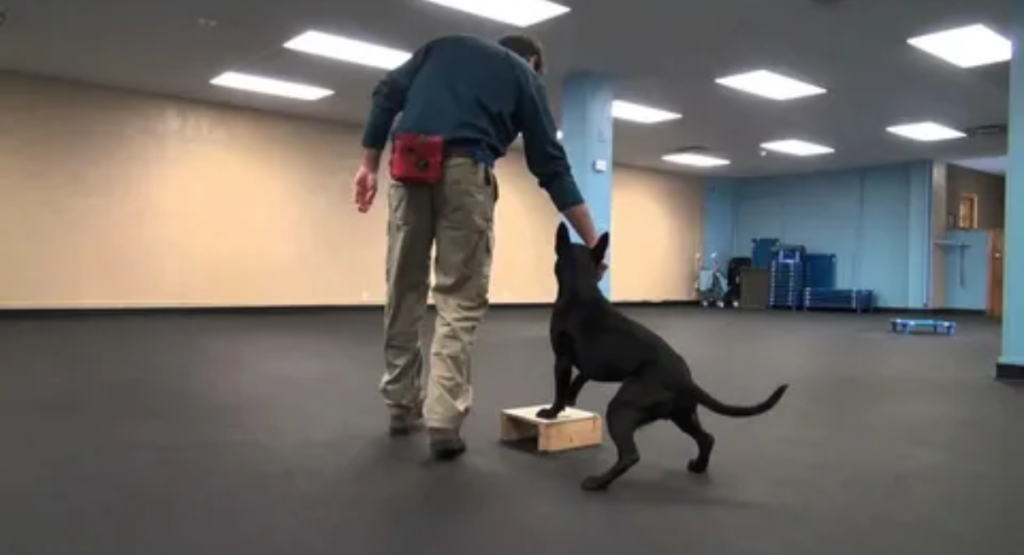
Most guides skip this section entirely. Do not start training with the wrong equipment — it will slow you down and frustrate both of you.
The right leash: A standard 4 to 6-foot flat leash is ideal for heel training. It gives you enough control without restricting movement. Avoid retractable leashes completely — they teach your dog that pulling extends their range, which is the exact opposite of what you are training.
The right collar or harness:
- Flat collar: Fine for most dogs, especially at the beginning.
- Front-clip harness: Excellent for dogs that pull. When the dog pulls forward, the chest attachment gently pivots them back toward you — no pain, no choking, just redirection.
- Head halter (Gentle Leader): Works well for very strong dogs or power pullers — controls the head, which controls the body.
Treats: For heel training, you need high-value treats — real chicken, cheese, or hot dog pieces. Your dog needs to think that staying next to your knee is the best thing that has ever happened to them. Regular kibble will not cut it, especially outdoors where competing smells are everywhere.
Clicker (optional but helpful): A clicker gives your dog instant, precise feedback — the click marks the exact moment they did the right thing. If you use a clicker, always follow it immediately with a treat. The click means “yes, that exact thing you just did.”
Step-by-Step Heel Training for Beginners
This is the core of the guide. Follow these stages in order. Do not rush — each stage builds on the last.
Stage 1 — Teach the Position Indoors (No Leash Yet)
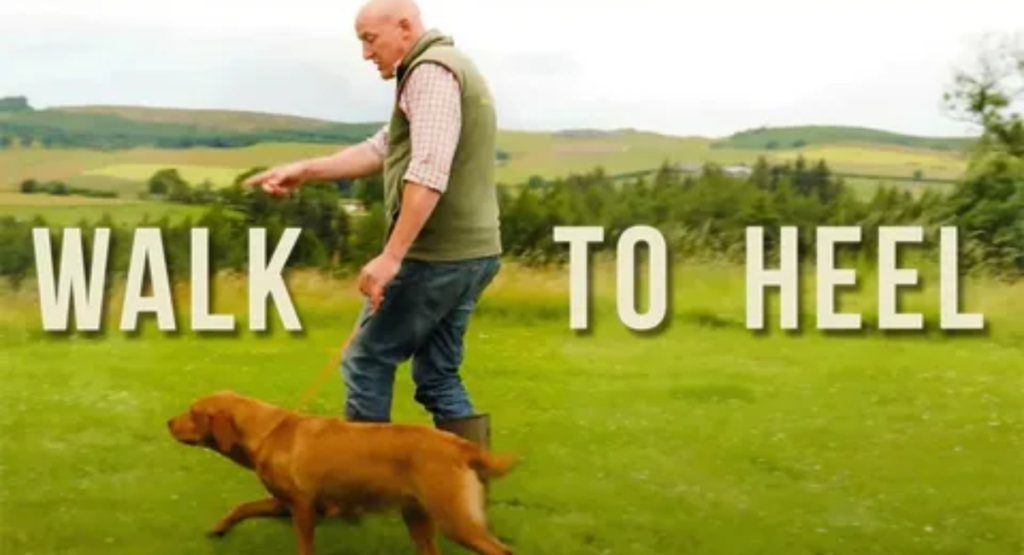
Start inside your home where there are zero distractions. A hallway is perfect because the walls naturally guide your dog into the correct position.
Begin by standing still. Hold a treat in your left hand at hip level and let your dog sniff it.
Lure your dog to your left side so their nose is near your knee. This is the heel position. Say “Yes!” and give the treat immediately.
Repeat this 10 to 15 times until your dog moves to your left side automatically when they see your hand at hip level.
Add the word. As your dog moves into position, say “Heel!” in a clear, calm voice — once only. Give the treat when they are in the correct spot.
At this stage, you are not walking yet. You are teaching the dog what “heel” means as a position.
Stage 2 — First Steps
Once your dog reliably moves to your left side on the heel command, add movement.
With your dog in heel position, say “Heel!” and take two steps forward. Keep the treat at your hip — do not wave it in front of their nose. If they stay beside you for those two steps, say “Yes!” and reward immediately.
If they move ahead or drift away, stop walking. Do not pull the leash — simply stop, reset your dog to the starting position, and try again.
When they can do two steps reliably, increase to five steps, then ten, then twenty. Build duration slowly — this is not a race.
Stage 3 — Add Turns and Changes of Pace
This is where most guides stop — and why most dogs only heel in a straight line.
About-turns: Turn 180 degrees without warning. Your dog has to hustle to get back to your side. This keeps their attention on you instead of the environment.
Pace changes: Speed up suddenly, then slow down, then stop completely. Your dog should match your pace and sit automatically when you stop.
The automatic sit: Every time you stop, lure your dog’s nose up and back slightly with the treat — their bottom will naturally lower into a sit. Reward heavily. After consistent practice, your dog will sit automatically every time you pause at a crosswalk. This is one of the most useful behaviors you can teach.
Stage 4 — Move Outdoors
This is the hardest stage for most dogs — and the one most beginner guides never prepare you for.
Outside, your dog faces hundreds of competing motivators: other dogs, squirrels, people, smells, traffic sounds. A dog that heels perfectly in your hallway will often seem to forget everything the moment they step outside.
This is called a lack of generalization — and it is completely normal.
To fix it, start in your driveway or quiet garden rather than a busy street. Use much higher-value treats outdoors than indoors. Keep sessions to 5 minutes maximum at first, then practice at increasing levels of distraction over several weeks: quiet street → park path → busy park → crowded street.
The ASPCA’s positive reinforcement guidelines confirm that dogs need consistent reinforcement in multiple environments before a behavior becomes truly reliable.
How to Train a Dog to Heel Without Treats
Many dog owners want to know how to train a dog to heel without treats — either because their dog is not food-motivated or because they do not want to carry treats forever.
The key point: you must first train with treats, then gradually fade them out. Trying to skip treats entirely at the start makes the process significantly slower.
How to fade treats:
Switch to a variable reward schedule. Instead of treating every step, treat every 3 steps, then every 10 steps, then randomly. Random rewards actually create stronger behavior than constant rewards.
Replace treats with praise. Once your dog understands heel reliably, enthusiastic verbal praise and petting can replace treats for calm dogs. For high-energy dogs, a favorite toy works well as a reward.
Use life rewards. Permission to sniff a bush, or permission to greet another dog, become rewards once your dog understands that heel leads to good things.
Fade to a hand signal only. You can drop the verbal cue and use a tap on your thigh or a hand signal instead. Many professional trainers prefer hand signals in public where they do not want to speak the command aloud.
How to Train a Dog to Heel Off Leash
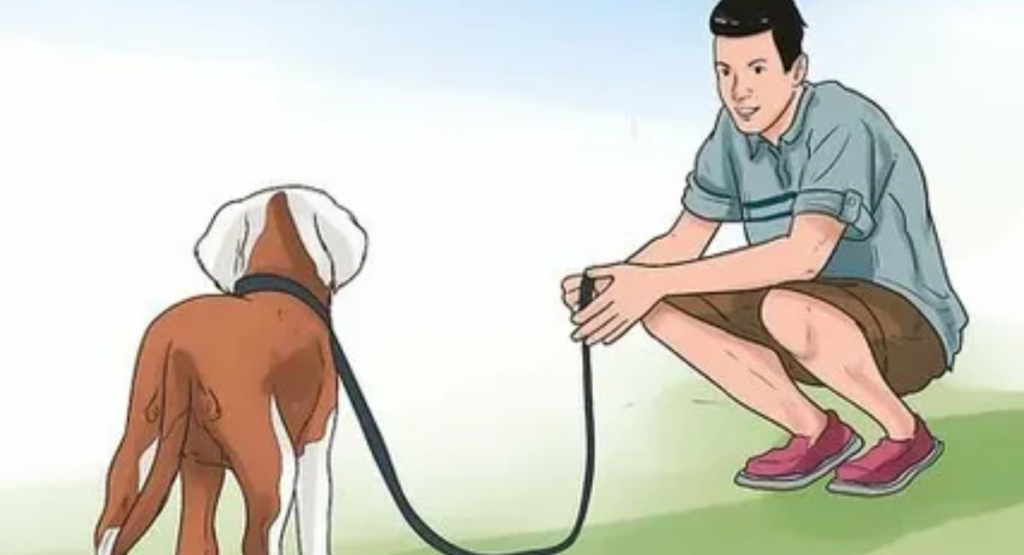
Off-leash heel training is the advanced version — and something almost no beginner guide covers. It is also the section most dog owners eventually want.
Only attempt this once your dog heels reliably on leash in high-distraction environments, you have a completely safe enclosed area, and your dog has a reliable recall.
Off-leash heel process:
In a fully enclosed area, unclip the leash and hold treats in your hand at hip level. Say “Heel!” and walk forward. Reward heavily for every step your dog stays beside you.
If they drift away, stop walking and call them back — do not chase them. Wait for them to return, then reward.
Gradually increase session length and add about-turns and pace changes, just as in on-leash training. Then introduce mild distractions (a toy on the ground, another family member walking past) before working around other dogs or busier environments.
Off-leash heel is a skill that takes weeks to months to solidify. Never practice off-leash in an unfenced area until the behavior is completely reliable.
Puppy Heel Training vs Adult Dog
This is one of the most important sections — and the differences are significant.
Training a Puppy to Heel (8 Weeks to 6 Months)
Puppies have very short attention spans — 2 to 3 minutes maximum per session. Training must be short, fun, and end before the puppy gets bored or frustrated.
- Do not expect perfection. A puppy heel looks wobbly and imprecise, and that is normal.
- Use tiny, soft treats. Hard treats take too long to chew and break focus.
- Train off-leash inside the house first — no leash pressure at all.
- Keep it playful. Heel training should feel like a game, not a military drill.
- Never punish a puppy for losing focus — simply reset and try again.
At this stage, you are building a foundation of trust and association. A puppy that learns heel is fun will grow into a dog that heels reliably as an adult — far better than one that learned heel is stressful.
Training an Adult Dog to Heel
Adult dogs can focus longer and learn faster in some ways — but they also come with established habits, especially if they have been pulling on a leash for years.
- Pulling is a deeply ingrained habit. Be prepared for the process to take longer than with a puppy.
- Use a front-clip harness if your adult dog is a strong puller — it makes the process significantly easier.
- For every month of bad leash habits, expect at least one to two weeks of consistent training to replace them.
- Adult dogs respond well to longer training sessions — 10 to 15 minutes is appropriate.
How to Train a Blue Heeler Dog to Heel
If you have a Blue Heeler (Australian Cattle Dog), you already know you have an extraordinarily smart, high-energy, and sometimes stubborn dog. The same core methods apply — but with important adjustments.
Burn energy first. A Blue Heeler that has not exercised will not focus on heel training. Give them 20 to 30 minutes of vigorous activity before any session. A tired Blue Heeler is a trainable Blue Heeler.
Mix up the commands. Blue Heelers are working dogs bred to make decisions. They get bored with repetitive training quickly. Mix heel training with sit, down, and stay to keep their brain engaged.
Use positive reinforcement only. Blue Heelers are sensitive to leash pressure and often push back against physical correction. Positive reinforcement methods work significantly better than compulsion-based methods for this breed.
Be consistent every single walk. Blue Heelers will test you. If you allow pulling sometimes and expect heel other times, they will take advantage of the inconsistency. Pick a standard and stick to it.
Use short, frequent sessions. Two 5-minute sessions per day will produce better results than one 20-minute session that ends in frustration.
If your Blue Heeler loses interest in food during training periods, see our article on why your dog might not be eating for guidance.
Common Problems and How to Fix Them
My dog keeps forging ahead
Do frequent about-turns without warning. Every time your dog gets ahead of your knee, turn 180 degrees the other direction. Your dog will have to rush back to your side. After a few sessions, they will learn to watch you instead of leading.
My dog lags behind and refuses to move
Lagging is often a sign of stress or insufficient motivation. Lower your expectations temporarily — reward for just being near your side rather than in perfect position. Use higher-value treats. Never drag or pull the leash, as this creates more resistance.
My dog heels perfectly inside but falls apart outside
This is a generalization issue, not a training failure. Go back to basics outside — treat more frequently, ask for less duration, and increase distraction level very gradually. You are essentially starting over in a new environment, and that is completely normal.
My dog ignores me when they see other dogs
Increase the distance from the other dog until your dog can focus on you. This is called “working below threshold.” Reward heavily for attention when another dog is visible but far away. Slowly decrease the distance over multiple sessions.
My dog pulls on the leash constantly
The moment leash tension appears, stop walking completely and stand still — become an anchor. Only move forward again when the leash goes completely slack. This is the “be a tree” method, and it works because forward movement stops being a reward for pulling. Combine it with a front-clip harness for faster results. For additional tips, see PetMD’s positive training guidance.
How Long Does It Take to Train a Dog to Heel?
Here is a realistic timeline with daily 5-minute training sessions:
| Stage | Timeframe |
|---|---|
| Basic position understanding | 1 to 2 weeks |
| Reliable heel indoors | 2 to 4 weeks |
| Reliable heel outdoors (low distraction) | 4 to 8 weeks |
| Reliable heel outdoors (high distraction) | 3 to 6 months |
| Off-leash heel | 6 months to 1 year |
These timelines assume consistent daily practice. Training once or twice a week can double or triple these estimates.
The most common reason dogs take longer is owner inconsistency — allowing pulling on some walks while expecting heel on others sends mixed signals that slow learning dramatically.
Distraction Proofing — The Final Step
Distraction proofing teaches your dog to heel reliably no matter what is happening around them. It is the difference between a dog that heels in your backyard and a dog that heels past a dog park full of barking dogs.
The three D’s of distraction proofing:
Distance: Start with distractions far away and gradually decrease the distance as your dog succeeds.
Duration: Increase how long your dog holds heel position before getting rewarded.
Distraction level: Progress from low (empty park) to medium (quiet street) to high (busy park, other dogs, children).
Never increase two D’s at once. If you are increasing distraction level, reduce the duration you expect. If you are increasing duration, stay in a low-distraction environment.
Realistic distraction progression:
- Quiet hallway at home
- Your garden or driveway
- Quiet residential street — early morning
- Residential street — normal hours
- Quiet park path
- Park with other people walking
- Park with dogs visible but distant
- Busy park with dogs nearby
- Street with traffic
- Crowded public place — market, pet store, busy trail
Do not rush this progression. Your dog’s confidence and reliability will build with each level.
Frequently Asked Questions

Q: Which side should my dog heel on? Traditionally, dogs heel on the left side — a convention from military and hunting traditions where firearms were carried on the right. For a family pet, the side does not matter, but you must pick one and stay consistent. Switching sides confuses your dog.
Q: How do you train a dog to walk to heel if they have never learned it before? Start from Stage 1 of this guide — teaching the position indoors with no leash. Do not try to fix a pulling problem during your regular walk. Create a separate training walk for heel practice, and use a harness for regular walks in the meantime.
Q: How long does it take to train a dog to heel? See the full timeline above. In short: basic position takes 1 to 2 weeks, reliable outdoor heel takes 4 to 8 weeks, and fully distraction-proofed heel takes 3 to 6 months of consistent daily practice.
Q: Can you train an older dog to heel? Absolutely. Adult dogs can learn heel at any age. The process may take longer because you are replacing ingrained pulling habits, but with consistent positive reinforcement, any dog can learn to heel reliably.
Q: How do you train a dog to heel without treats? First train with treats, then gradually switch to a variable reward schedule, then replace treats with praise, life rewards, and play. Skipping treats entirely at the beginning slows the process significantly.
Q: My dog heels perfectly at home but pulls outside. What am I doing wrong? Nothing — this is completely normal. Dogs do not automatically apply what they learn in one environment to a different environment. Train in progressively more distracting environments, starting from almost zero distraction outdoors.
Q: How do I train a Blue Heeler to heel? Blue Heelers respond best to positive reinforcement, short energetic sessions, and plenty of mental stimulation. Always exercise your Blue Heeler before training, and stay consistent — Blue Heelers will test any gap in your expectations.
Q: Should I use a clicker for heel training? A clicker is helpful but not essential. It gives your dog precise, instant feedback marking the exact moment they did the right thing. If you use a clicker, always follow it immediately with a treat — the click means nothing without the reward.
Q: How do I stop my dog from pulling on the leash while teaching heel? Stop walking the moment the leash goes tight — every single time, without exception. Only move forward when the leash is loose. Add a front-clip harness for faster results and combine the “be a tree” method with active heel training.
Q: At what age should I start training my puppy to heel? You can begin heel training as early as 8 weeks old — but keep sessions to 2 to 3 minutes maximum. At this age, the goal is simply building a positive association with the heel position. Formal heel training with outdoor walks can begin around 12 to 16 weeks, after vaccinations are complete.
Final Thoughts
You now have everything you need to teach your dog to heel — start with Stage 1 today and you will see real progress within a week.
The key things to carry forward:
- Teach the position first, then add movement
- Never reward pulling — even accidentally — by continuing to walk
- Proof your training in multiple environments before calling it reliable
- Puppies and adult dogs need different pacing — adjust accordingly
- Blue Heelers and other working breeds need extra energy management before sessions
If you are building your dog training skills from the ground up, read our complete guide on everything your dog needs to stay healthy to make sure your dog is physically and nutritionally ready for training.
For professional reinforcement between your own training sessions, consider working with certified dog training professionals who maintain the same heel standards you are building at home.
At Dog Pulse, we believe informed dog owners make better training partners. Always consult a certified professional trainer if your dog shows fear, aggression, or extreme anxiety during training.