


Introduction
Can dogs eat bananas? Yes — dogs can eat bananas, and for most healthy pups, this sweet, potassium-rich fruit makes a safe, natural treat when given in moderation. Bananas are non-toxic, easy to digest for most dogs, and packed with nutrients like potassium, vitamin B6, vitamin C, fiber, and magnesium. That said, bananas are also high in natural sugar, which means portion control matters, and there are a few details — like whether your dog can eat the peel, how much banana is too much, and which dogs should avoid bananas altogether — that every owner should know before sharing this fruit. This guide covers everything: benefits, risks, exact serving sizes by dog size, banana bread and banana chips, puppies, a DIY banana dog treat recipe, and vet-verified answers to the questions dog owners search for most.
Quick Answer
Yes, dogs can eat bananas safely as an occasional treat. Peel the banana, cut it into small, age- and size-appropriate pieces, and limit servings to no more than 10% of your dog’s daily calorie intake. Never feed banana peels, banana bread, or banana pudding, since these either cause digestive blockages or contain ingredients unsafe for dogs.
Key Takeaways
- Can dogs eat bananas? Yes, in moderation — bananas are non-toxic and nutritious for most dogs.
- Can dogs eat banana peels? No. Peels aren’t toxic, but they’re difficult to digest and can cause a gastrointestinal blockage.
- Can dogs eat banana bread? Generally no, unless it’s a plain, dog-safe recipe made without sugar, xylitol, chocolate, or nuts.
- How much banana can dogs eat? Small dogs: 1–2 small slices; medium dogs: 2–3 slices; large dogs: up to half a banana, occasionally.
- Can puppies eat bananas? Yes, in very small amounts, introduced slowly.
- Dogs that are diabetic, overweight, or prone to pancreatitis should avoid or strictly limit bananas.
- Bananas should never replace a complete, balanced dog food — they’re a supplemental treat only.
Table of Contents
- What Makes Bananas Beneficial for Your Dog
- Benefits and Risks of Dogs Eating Bananas
- Potential Risks of Bananas for Dogs
- Can Dogs Eat Banana Peels?
- Can Dogs Eat Banana Bread?
- Can Dogs Eat Banana Chips?
- How Much Banana Can Dogs Eat?
- How to Feed Your Dog Bananas
- Feeding Tips
- Can Puppies Eat Bananas?
- DIY Banana Dog Treat Recipe
- Vet-Verified Answer
- Common Mistakes Owners Make
- Real-Life Example
- Other Fruits: What’s Safe and What’s Not
- FAQs
- Conclusion
What Makes Bananas Beneficial for Your Dog
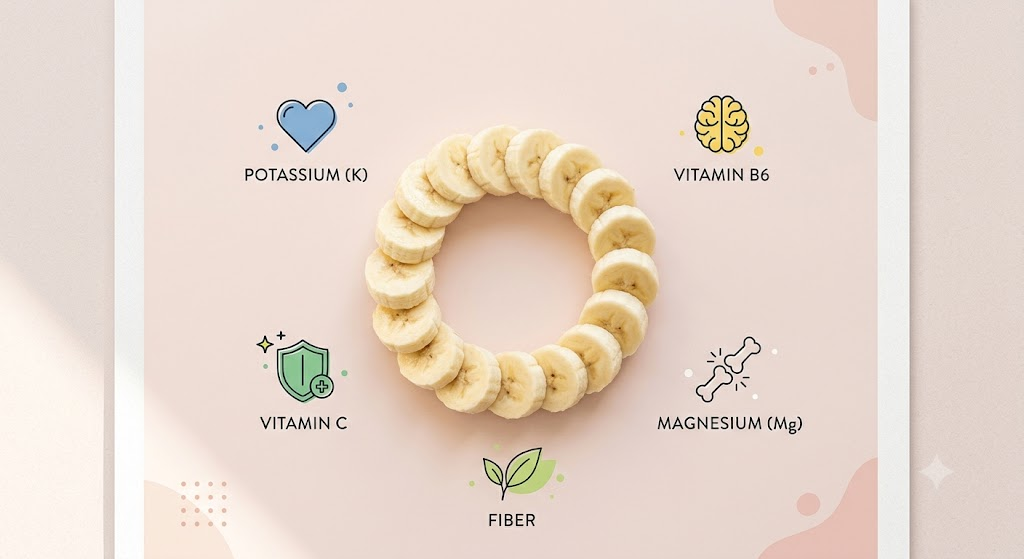
Bananas aren’t just a convenient, mess-free snack — they contain a genuinely useful nutrient profile for dogs. Here’s what’s inside a banana and why it matters for canine health:
| Nutrient | Role in Your Dog’s Health |
|---|---|
| Potassium | Supports heart rhythm, muscle contraction, and nerve function |
| Vitamin B6 | Aids red blood cell production, hormone regulation, and brain function |
| Vitamin C | Antioxidant support; most dogs produce their own, but extra doesn’t hurt |
| Dietary fiber | Supports digestion and can help firm up loose stools |
| Magnesium | Contributes to bone health and helps the body absorb other nutrients |
| Natural sugars | Provide quick energy — but this is also the main reason moderation matters |
Because dogs already synthesize their own vitamin C and get complete nutrition from a quality dog food, bananas aren’t a necessary addition to the diet — but as an occasional treat, they check a lot of nutritional boxes without the salt, fat, or additives found in many commercial dog treats.
Benefits and Risks of Dogs Eating Bananas
Benefits
- Low in sodium and cholesterol compared to many packaged dog treats
- A healthier alternative to fatty, salty snacks — some veterinarians recommend fruit like banana as a treat swap for dogs that need to watch their weight
- Fiber content can support digestive regularity, especially for dogs with mild gastrointestinal sensitivity
- Naturally appealing texture and sweetness make bananas useful for picky eaters, food puzzles, and frozen enrichment treats
- Versatile — mashed into food, frozen in a puzzle toy, or sliced fresh, bananas adapt to almost any feeding style
Risks
- High natural sugar content relative to other dog-safe fruits like blueberries or watermelon
- Choking hazard if fed in large chunks, especially to small dogs or dogs that gulp their food
- Digestive upset (loose stools, gas, or vomiting) if a dog eats too much, too fast, or isn’t used to fiber-rich foods
- Not appropriate for every dog — diabetic, obese, or pancreatitis-prone dogs should avoid or minimize bananas
- Peels, banana bread, and banana pudding carry separate risks unrelated to the fruit itself
Potential Risks of Bananas for Dogs
While bananas are considered one of the safer fruits for dogs, a few specific risk factors deserve extra attention:
- Sugar and weight gain. Bananas contain more sugar than many dog-safe fruits. Dogs that are overweight, sedentary, or already managing their calorie intake shouldn’t have bananas as a regular treat.
- Diabetes management. Because bananas can raise blood sugar, dogs with diabetes should only have banana with direct veterinary guidance, if at all.
- Pancreatitis risk. Dogs with a history of pancreatitis are typically advised to avoid high-sugar, energy-dense treats, including bananas, unless a vet says otherwise.
- Kidney disease. Bananas are high in potassium. For dogs with kidney disease who need to limit potassium intake, bananas can be problematic — always check with your vet first.
- Gastrointestinal blockage from peels or overeating. This is the most physically dangerous risk and is covered in detail below.
- Allergic reactions. Rare, but possible. Introduce banana in a small amount and watch for itching, swelling, vomiting, or diarrhea.
Can Dogs Eat Banana Peels?
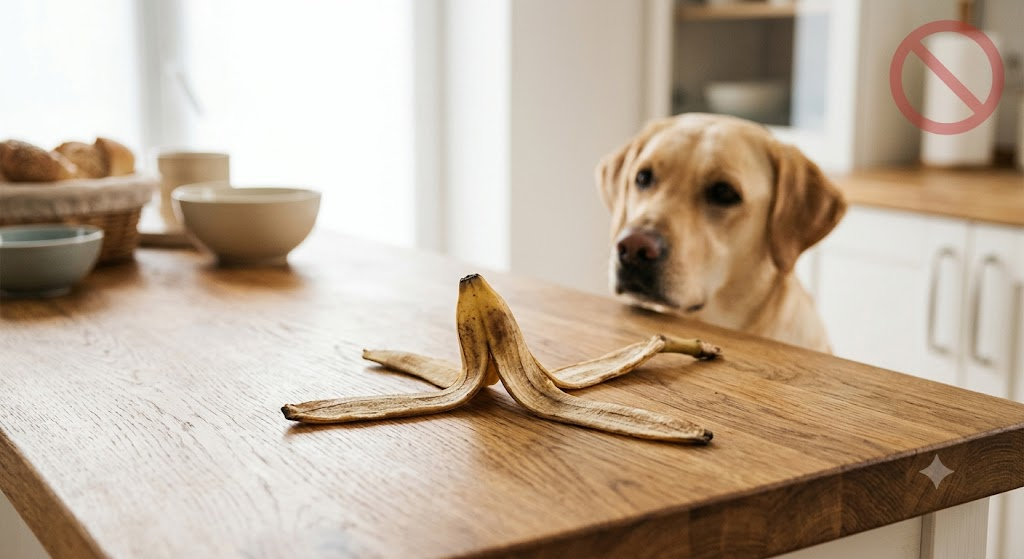
No — dogs should not eat banana peels. Banana peels are not toxic in the way that grape skins or onion are, but they are extremely fibrous and difficult for a dog’s digestive system to break down. Eating a banana peel — especially a large piece — can lead to:
- Vomiting
- Constipation
- Bloating or abdominal discomfort
- In more serious cases, a gastrointestinal obstruction that requires veterinary treatment or surgery
Peels may also carry pesticide residue if the banana wasn’t washed. If your dog snatches a peel off the counter or out of the trash, monitor them closely for the next 24–48 hours. Watch for repeated vomiting, straining to defecate, lethargy, or a bloated abdomen, and call your veterinarian immediately if any of these appear.
Can Dogs Eat Banana Bread?
Most banana bread is not a safe treat for dogs. Traditional recipes contain large amounts of sugar, butter, and sometimes chocolate chips, walnuts, macadamia nuts, or raisins — several of which are toxic to dogs. A small lick of plain banana bread with no toxic ingredients is unlikely to cause serious harm, but it offers no nutritional benefit and contributes empty calories and fat.
If you want to bake a dog-safe version:
- Use whole wheat or oat flour instead of refined white flour
- Replace sugar with mashed ripe banana or a small amount of plain pumpkin puree
- Skip butter — use unsweetened applesauce or a dog-safe oil in small amounts
- Never add chocolate, raisins, grapes, macadamia nuts, or xylitol-sweetened ingredients
- Bake in a mini muffin tin so portions stay treat-sized, not meal-sized
Can Dogs Eat Banana Chips?
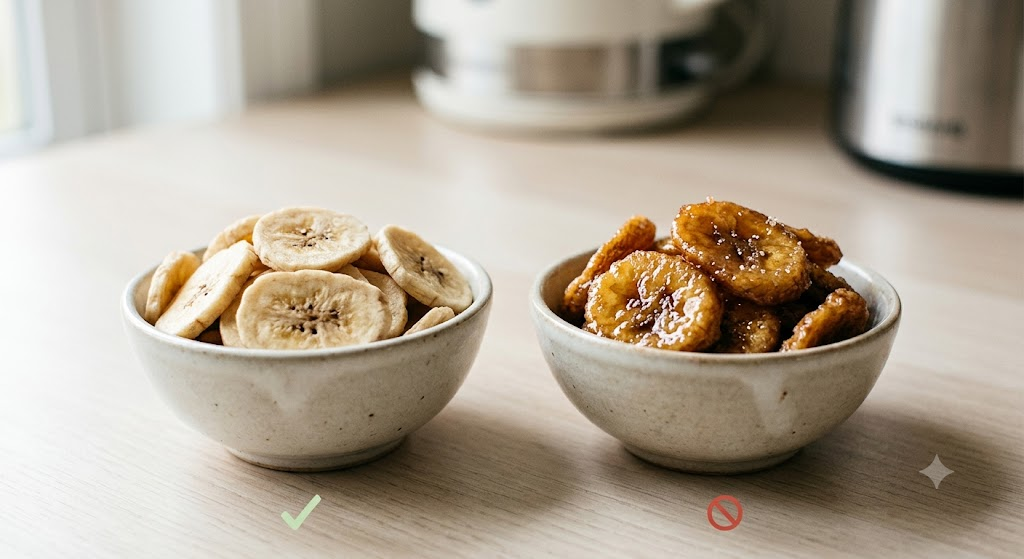
It depends entirely on the ingredients. Plain, unsweetened, dehydrated banana chips made from nothing but banana are generally fine in small amounts. However, most store-bought banana chips are fried in oil, coated in sugar or honey, or sprayed with preservatives — none of which are good for dogs. Some “healthy” snack brands also sweeten dried fruit with xylitol, an artificial sweetener that is highly toxic to dogs even in small amounts and can cause a rapid, life-threatening drop in blood sugar.
Before feeding banana chips:
- Read the ingredient label — it should say “bananas” and nothing else
- Avoid any product listing sugar, oil, honey, or sweeteners of any kind
- Stick to fresh banana or homemade dehydrated slices instead when possible
How Much Banana Can Dogs Eat?
Portion size depends on your dog’s body weight. As a general feeding guideline:
| Dog Size | Weight Range | Recommended Banana Portion |
|---|---|---|
| Small dogs | Under 20 lbs | 1–2 small slices, occasionally |
| Medium dogs | 20–50 lbs | 2–3 slices |
| Large dogs | Over 50 lbs | Up to half a banana |
Even for large dogs, a whole banana in one sitting is too much. As a rule of thumb, treats of any kind — including fruit — should never make up more than 10% of a dog’s total daily caloric intake, with the remaining 90% coming from a complete and balanced dog food. If you’re feeding banana regularly, consider trimming back other treats that day to keep total calories in balance.
How to Feed Your Dog Bananas
There’s more than one way to serve bananas, and variety helps keep treat time interesting for your dog:
- Fresh slices — Peel and cut into bite-sized pieces appropriate for your dog’s size.
- Mashed into food — Stir a small amount of mashed banana into your dog’s regular meal as a flavor and texture booster.
- Frozen banana pieces — Slice, freeze on a tray, and offer a few pieces as a cooling treat, especially useful in hot weather or for teething puppies.
- Stuffed in a puzzle toy — Mash banana (optionally combined with dog-safe peanut butter) into a stuffable toy and freeze for a long-lasting, mentally enriching treat.
- Blended into a smoothie topper — Combine banana with plain yogurt (in dogs that tolerate dairy) for a mealtime topper.
Whatever method you choose, always remove the peel first and introduce banana gradually if it’s your dog’s first time trying it.
Feeding Tips
- Start small. The first time you offer banana, give a tiny piece and wait 24 hours to watch for any digestive reaction.
- Always remove the peel. This is the single most important safety step.
- Cut appropriately for size. Small or toy breeds are more prone to choking on large chunks.
- Avoid flavored or processed banana products — banana pudding, banana-flavored yogurt, and banana chips with added sugar are not the same as fresh fruit.
- Track total treat calories. If your dog gets banana today, scale back other treats to stay within the 10% rule.
- Refrigerate ripe bananas if you want to slow ripening and extend freshness for a few extra days.
- Talk to your vet first if your dog has diabetes, obesity, kidney disease, or a history of pancreatitis.
Can Puppies Eat Bananas?

Yes, puppies can eat bananas, but with extra caution. Puppies have smaller stomachs and more sensitive digestive systems than adult dogs, so any new food — including banana — should be introduced in a very small amount and only after your puppy is already established on a complete puppy food. Because puppies need a nutrient- and calorie-specific diet to support healthy growth, treats like banana should be an occasional extra, not a regular addition, so they don’t crowd out balanced puppy nutrition. If you’re unsure when to introduce fruit or how much is appropriate for your puppy’s breed and age, check with your veterinarian first.
DIY Banana Dog Treat Recipe
This simple, vet-friendly recipe uses just three dog-safe ingredients and requires no baking.
Frozen Banana & Peanut Butter Bites
Ingredients:
- 1 ripe banana, mashed
- 2 tablespoons of plain, unsweetened, xylitol-free peanut butter
- 2 tablespoons of plain unsweetened yogurt (optional)
Instructions:
- Mash the banana in a bowl until smooth.
- Stir in the peanut butter (and yogurt, if using) until fully combined.
- Spoon small, bite-sized amounts onto a parchment-lined tray, or fill a silicone mold or stuffable toy.
- Freeze for at least 2 hours, until solid.
- Serve one piece as an occasional treat, keeping portion size appropriate for your dog’s weight.
Important: Always double-check that your peanut butter brand does not contain xylitol — this sweetener is extremely toxic to dogs and is increasingly common in “sugar-free” peanut butter products.
Vet-Verified Answer
Veterinary nutrition sources, including AKC, PetMD, and VCA Hospitals, consistently agree: bananas are safe for most dogs in small, controlled portions, but they are a treat — not a dietary staple. The consensus points to three consistent rules: remove the peel, respect the 10% treat rule, and check with your veterinarian before introducing bananas if your dog has diabetes, obesity, pancreatitis, or kidney disease. If your dog shows any signs of digestive upset — vomiting, diarrhea, or lethargy — after eating banana, discontinue the treat and contact your vet if symptoms don’t resolve within 24 hours.
Common Mistakes Owners Make
- Feeding the peel along with the fruit because it seems like “less waste” — this is one of the top causes of banana-related vet visits.
- Assuming banana treats human digestive upset in dogs — bananas don’t reliably fix diarrhea in dogs and, in some cases, can make loose stools worse due to their sugar and fiber content.
- Giving a whole banana to a large dog thinking bigger dogs can handle bigger portions — even large dogs shouldn’t have more than about half a banana at a time.
- Sharing banana bread or banana pudding without checking for chocolate, raisins, nuts, or xylitol.
- Feeding banana daily as a meal topper without adjusting other treats, unintentionally pushing a dog over their daily calorie needs.
- Skipping the vet check for dogs with diabetes, kidney disease, or weight issues before adding any new fruit to the diet.
Real-Life Example
A Labrador Retriever owner might notice their dog is highly motivated by food but needs to manage weight during recovery from a leg injury. Swapping a daily high-calorie commercial biscuit for two thin banana slices — well within the 10% treat guideline — gives the dog a satisfying reward with fewer calories and less fat, while still respecting portion control. This kind of simple substitution is a common, practical way owners use bananas: not as a daily staple, but as an occasional lower-calorie alternative to processed treats.
Other Fruits: What’s Safe and What’s Not
Once you know bananas are safe, it’s natural to wonder about other fruits. Here’s a quick reference:
Generally safe in moderation: apples (no seeds or core), blueberries, watermelon (no rind or seeds), strawberries, pineapple, pears (no seeds).
Avoid entirely: grapes and raisins (linked to kidney failure), cherries (pits contain cyanide compounds), and any fruit product containing xylitol.
If you want a deeper breakdown of dog-safe fruits beyond bananas, our guide on can dogs eat dragon fruit covers another increasingly popular treat option with its own serving rules. And if your dog is currently on a restricted or sensitive-stomach diet, it’s worth reading our limited ingredient diet guide before adding any new fruit, since introducing new ingredients — even healthy ones — can trigger a reaction in sensitive dogs.
Frequently Asked Questions

1. Can dogs eat bananas every day?
Daily banana consumption isn’t recommended. While an occasional small piece is fine, feeding banana every day adds up in sugar and calories over time. Most veterinarians suggest limiting banana to two or three times a week at most, alternating with other low-sugar treats.
2. Can dogs eat banana peels safely?
No. Banana peels aren’t toxic, but they’re tough and fibrous, making them hard to digest and a real risk for gastrointestinal blockage. Always remove the peel before offering banana to your dog.
3. Can my dog eat bananas if he has diabetes?
Dogs with diabetes should avoid bananas or only have them under direct veterinary guidance, since the natural sugar content can affect blood sugar control.
4. Can dogs eat bananas safely if they’re overweight?
Overweight dogs can technically eat small amounts of banana, but because of the sugar content, it’s better to prioritize lower-calorie treats and speak with your veterinarian about appropriate weight-management options.
5. Can a dog eat bananas that are overripe or browning?
Yes. Overripe bananas are perfectly safe and are often sweeter, which many dogs enjoy. Just avoid any banana that’s moldy, as mold can be harmful.
6. Can dogs eat frozen bananas?
Yes, frozen banana pieces are a popular warm-weather treat. Slice and freeze small pieces rather than giving a whole frozen banana, which can be too large, hard, and difficult to bite through safely.
7. Is banana good for dogs with an upset stomach?
Not necessarily. While bananas contain fiber that can support digestion, they aren’t a proven remedy for diarrhea in dogs and may worsen symptoms in some cases due to sugar content. If your dog has ongoing digestive issues, contact your veterinarian rather than relying on banana as a home remedy.
8. Can dogs eat banana with the seeds?
Cultivated bananas sold in grocery stores typically don’t contain seeds large enough to pose a risk, unlike wild banana varieties. Standard grocery-store bananas are fine in this regard.
9. How do I know if my dog is allergic to bananas?
Watch for symptoms like itching, hives, facial swelling, vomiting, or diarrhea shortly after eating banana for the first time. True banana allergies in dogs are uncommon but possible — stop feeding immediately and consult your vet if you notice any of these signs.
10. Can senior dogs eat bananas?
Yes, senior dogs can generally eat bananas in moderation, though owners should be extra mindful of underlying conditions common in older dogs, such as diabetes, kidney disease, or reduced activity levels that make excess sugar and calories more impactful.
Conclusion
So, can dogs eat bananas? Yes — for the vast majority of healthy dogs, bananas are a safe, nutrient-rich, low-sodium treat that can be a smart alternative to processed dog snacks. The keys to feeding bananas safely come down to a few simple habits: remove the peel every time, keep portions appropriate for your dog’s size, respect the 10% treat rule, and skip banana bread, pudding, or sugary banana chips. Puppies, senior dogs, and dogs with diabetes, obesity, pancreatitis, or kidney disease need extra caution and, ideally, a quick check with their veterinarian first.
If you’re looking for more vet-informed nutrition guidance, browse our full library of Dog Food guides for breed-specific feeding advice, ingredient breakdowns, and honest product reviews — or check out our guide on what adult dogs can and can’t eat from puppy food if you’re navigating a multi-dog household with different life stages.